Updated on Dec, 24 2025 03:08 IST
Study in Austria- Top Universities, Courses, Fees, Scholarships





Test Preparations
About Us
Knowledge Hub

 What comes to your mind when you hear your peers saying: study abroad or study in Europe? We know that the first few thoughts that strike an Indian student’s mind are cross-cultural issues, language barriers, difficult admission procedures, tough eligibility criteria, highly expensive tuition fee, and unbearable cost of living. Now, what if we tell you that it is exactly opposite of what you have been thinking till date? Now what if we tell you that the cost of studying in Europe is similar or even lower than Indian cities like Mumbai or Delhi? Well, that is actually true! Did you know that Austria is slowly becoming the top destination for many Indian students looking to study abroad? The credit goes to the country’s well-established educational infrastructure, affordable tuition fee, modern curriculum, ample job opportunities, low cost of living, and more. With key emphasis on quality education, research, and innovation, Austrian universities like the University of Graz, University of Vienna, and University of Salzburg are renowned for offering an up-to-date curriculum and practical learning that future leaders need. From German and English-taught traditional courses like Medicine, Art, Law, and Management, the country even offers a range of modern courses in the fields of Data Security, Artificial Intelligence, Mechatronics, Nanotechnology, and more. With a highly affordable tuition fee starting from €726 per semester and a relatively low monthly cost of living of €1,600 to €2,000, Austria attracts thousands of international students from across the world. Here is everything about what study in Austria holds for you.
For every Indian student looking to study in Austria, the country is lot more than just an economic super power. Here are some interesting facts and figures you must know about this amazing country in Europe:
Austria is a Schengen member country.
Austria's nominal GDP per capita ranks 13th globally making it one of the strongest economies in the world.
Austria ranks in the top 10 most peaceful countries globally.
Austria attracts a diverse international student body, with over 66,000 international students.
There are 23 public universities, 19 private universities, 21 Universities of Applied Sciences, and 14 University Colleges of Teacher Education in Austria.
Non-EU/EEA students are allowed to work part-time for up to 20 hours per week during the program and for full-time during breaks.
The average living cost to study and stay in Austria ranges from €900 to €1,300 per month however, this can vary from one city to another.
A valid health insurance is mandatory for all international students coming to study in Austria.
Austrian government and universities offer scholarships and grants for Non-EU/EEA students which can cover up to full tuition wavier.
Studying in a country like Austria can offer a wide range of advantages to the learners including rich cultural exposure, opportunities to work in Europe, access to world-class educational and research facilities and more. Let us look at each benefit in detail:
Schengen Country: Austria is a Schengen member country sharing its border-free zone with 28 other European countries. This implies that with a residence permit for Austria, students enjoy the freedom and flexibility to travel to other countries for leisure, cultural and academic experiences.
Low Cost of Living: The cost of living in Austria is lower than many other European countries. You can keep up a good lifestyle by spending about €1500-2000 per month including accommodation, utility, and food expenses.
World-class Universities: Austria is renowned for having some of the top-ranking and centuries-old engineering, medicine, management, and arts universities like the University of Graz, University of Vienna, and University of Innsbruck.
English-taught Programs: Austrian universities offer a wide-range of English-taught programs specially at the master’s level. You can apply to study in Austria for the course of your choice by proving your English-language proficiency through TOEFL/IELTS.
Low Tuition Fee: Austria offers quality education to Non-EU/EEA students at an affordable tuition fee. You can study in Austria at a public university by paying a nominal tuition fee of €727 per semester. Even the tuition fee for private universities is quite affordable than many other countries.
Strong Economy: Austria is one of the wealthiest economies of the world. Thus, the country can provide ample job opportunities and growth prospects across sectors for students coming from other countries.
Safe Country: Austria is ranked as one of the safest countries in the world (ranked 4th in the 2025 Global Peace Index). With a very low crime-rate, the country is considered among safest for foreign students.
Modern Curriculum: Austrian universities offer a wide-range of programs in the fields of medicine, law, technology, arts, management, and more. The course curriculum is up-to-date to fill in the current skill gap and to manage future challenges in different sectors.
Austria is a top choice for many Indian students looking to study abroad. If you are looking to study a bachelor’s or a master’s program in Austria, here is a list of all the available courses offered at Austrian public and private universities:
Austrian universities follow the Bologna process and the academic year is structured into semesters. The duration to study in Austria will depend on the program you choose. Here are the details of course duration to study a bachelor’s and a master’s program in the country:
| Degree Level | Course Duration (Full-time) |
| Bachelor's Degree | 3 to 4 years (6–8 semesters) |
| Master's Degree | 1 to 2 years (2–4 semesters) |
| Diploma Programs | 4 to 6 years (8–12 semesters) |
The eligibility criteria to study in Austria may differ on the basis of the type of program you choose and the university offering the program. For instance, language proficiency requirements may differ depending on the language of instructions. Given below is a broader criterion followed by most Austrian universities:
Eligibility Criteria to Study Bachelors in Austria:
Academic
10+2 from a recognised Indian board.
Subjects of study will depend on the program.
Proof of Eligibility
Students from Non-EU/EEA countries must provide proof that their qualifications are sufficient to study the program in their home country.
Entrance examinations
For medicine and arts programs with limited seats.
Language proficiency
English: IELTS score of 6.0–6.5 or a TOEFL score of 80–92.
German: B2 or C1 German language proficiency is required.
German preparatory course
Universities may ask you to enrol in a university-preparatory course.
Eligibility criteria to Study Masters in Austria:
Academic
A Bachelors’ degree from a recognised Indian university in the relevant field.
Entrance examinations
For specialized master's programs at UAS.
Language proficiency
English: IELTS score of 7 or a TOEFL score of 90+.
German: C1 German language proficiency is required.
German preparatory course
Universities may ask you to enrol in a university-preparatory course.
The world looks at Austria due to two main reasons: It is one of the most developed economies and it is home to some of the oldest and best universities in the world. Having a long history of providing quality education to all, these public and private universities in Austria are placed high in the global rankings:
| Top Public Universities |
|---|
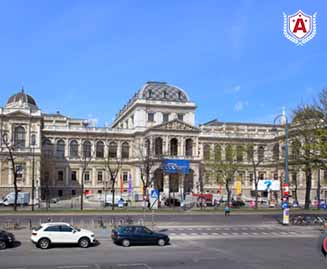
| Year of Establishment | 1365 |
| National Ranking | 2nd |
| Location | Vienna |
| Popular Courses | IT & Data , Business & Economics, Law, Humanities & Social Sciences |
| Fees | 388 to 400 Euro / Semester |
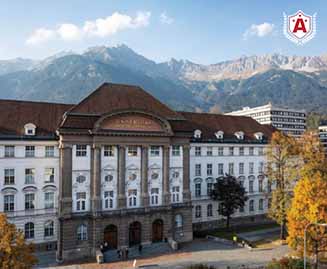
| Year of Establishment | 1669 |
| National Ranking | 3rd |
| Location | Innsbruck |
| Popular Courses | Economics, Engineering, Sciences, Humanities & Social Sciences |
| Fees | 363 to 380 Euro / Semester |
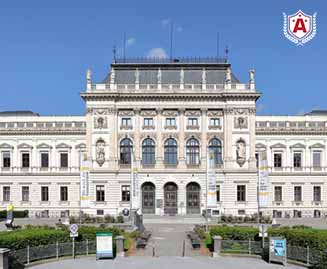
| Year of Establishment | 1585 |
| National Ranking | 7th |
| Location | Graz |
| Popular Courses | Humanities & Social Sciences, Law & Economics |
| Fees | 726 Euros / Semester |

| Year of Establishment | 1995 |
| National Ranking | 22nd |
| Location | Graz |
| Popular Courses | Engineering, Business, Health & Life Sciences |
| Fees | 727 Euros / Semester |
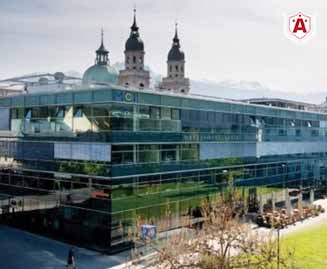
| Year of Establishment | 1995 |
| National Ranking | 6th |
| Location | Innsbruck |
| Popular Courses | Business & Management, Technology & Innovation |
| Fees | 364 Euros / Semester |

| Year of Establishment | 1997 |
| National Ranking | 8th |
| Location | Kufstein |
| Popular Courses | Technology & Digitalization, Business & Management |
| Fees | 363 Euros / Semester |
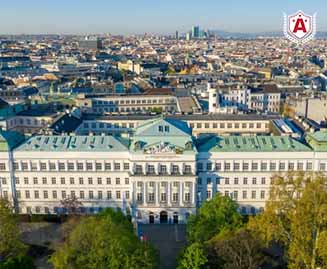
| Year of Establishment | 1815 |
| National Ranking | 4th |
| Location | Vienna |
| Popular Courses | Engineering, Architecture, Technical Chemistry & Physics |
| Fees | 727 Euros / Semester |
| Top Private Universities |
|---|
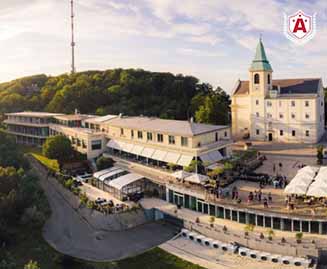
| Year of Establishment | 2007 |
| National Ranking | 4th |
| Location | Vienna |
| Popular Courses | Tourism & Hospitality Management, Business & Economics |
| Fees | 6000-8000 Euros / Semester |
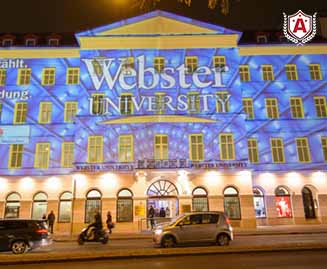
| Year of Establishment | 1981 |
| National Ranking | 59th |
| Location | Vienna |
| Popular Courses | Business & Management, Media Communications, Psychology |
| Fees | 11000-13000 Euros / Semester |
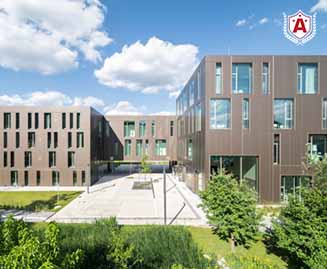
| Year of Establishment | 2013 |
| National Ranking | 20th |
| Location | Krems an der Donau |
| Popular Courses | Medical Studies, Psychology, Health Studies |
| Fees | 10000-12000 Euros / Semester |
The tuition fee to study in Austria may vary a lot depending upon several factors including course type, university type, and even the citizen of an applicant. Tuition fee in public universities in Austria is much lower than private universities and EU/EEA students pay lesser amount to study in Austria in comparison to Non-EU/EEA students. Check out the details of the fee structure below:
| Public Universities | |||
|---|---|---|---|
| University | Citizenship | Bachelor's & Master's | |
| University of Vienna, TU Wien, University of Innsbruck, University of Graz | Non-EU/EEA | €727 per semester | |
| FH Joanneum | Non-EU/EEA | €727 per semester | |
| MCI Management Center Innsbruck | Non-EU/EEA | €7,500 per semester | |
| FH Kufstein Tirol | Non-EU/EEA | €727 to €7,500 per semester | |
Note: The amount may vary depending upon the programs. You must check the real-time conversion rates.
Being an affordable country in terms of education, Austria takes a lead in making quality education completely free on merit and need basis for Non-EU/EEA students. Austrian government and universities provide grants and scholarships and Indians are eligible to apply. Here are the details:
National scholarships (administered by OeAD)
Ernst Mach Grant: Leading Austrian scholarship, that lends financial support to international students.
Benefits Included: Offers a wide range of benefits like monthly stipend, tuition fee waivers, travel costs, and health insurance.
Scholarship Foundation of the Republic of Austria: For students from countries affected by the Nazi regime.
Benefits Included:Offers a monthly grant of up to €1,000, partial tuition coverage, and travel support.
Austrian Development Cooperation (ADC) Scholarships:Financial support for students from developing countries.
Benefits Included:Fully-funded includes: tuition fee, accommodation, flights, and health insurance, for priority countries.
International scholarships
Erasmus+:European Union program for student mobility and joint Master's degrees.
Benefits Included: Covers tuition fees, travel, health insurance, and a monthly allowance for living expenses.
University-specific Scholarships
TU Wien:Offers scholarships for international students pursuing master's degrees in technology and applied sciences.
University of Vienna:Offers grants and financial aid to international students for research programs.
MCI Management Center Innsbruck:Offers several scholarships for its degree programs, including the "MCI Global Scholarship".
Quick Tips:
Use the grants.at database:You can use this database to filter scholarships by country of origin, field of study, and academic level.
University's website:Look for the "Scholarships and Funding" page on your university’s website to know your eligibility to apply.
Regional programs:Some scholarships are specific to certain regions, such as the Western Balkans or Southeast Asia.
Private foundations:Use the grants.at database to find grants from private foundations.
To prove your eligibility to study in Austria, you are required to furnish a set of documents along with your application form. These will include your personal, academic, and language proficiency proofs. To make it easier for you, we have curated a checklist so that you can compile your documents in advance:
Academic and Educational Documents:
For Bachelor’s: 10th and 12th Marksheets, School Leaving Certificate
For Master's: Bachelor's Degree, Semester-wise mark sheets, Curriculum Vitae/Resume, Internship Certificates, Work Experience/ Employment Letter for Masters
Language Proficiency Documents:
IELTS Score
TOEFL iBT Score
Proof of German language proficiency
Identity Documents:
Passport
Birth Certificate
Recent Passport-size Photos: 6-8
Financial Documents:
Proof of Sufficient Funds
Application Documents:
Application Form
Statement of Purpose (SOP)/Motivation Letter
Letters of Recommendation
Health & Insurance Documents:
Health Insurance
Medical Fitness Certificate
Visa-Specific Documents:
Visa Application (Form D)
University Invitation Letter
Fee Payment Receipt
Proof of Accommodation
Proof of Travel
Health Insurance
Travel Insurance
Unlike the common university norms, Austrian universities do not have any on-campus hostel facilities. Thus, you must arrange your own accommodation before arriving to study in Austria. Here are some of the most common options available for international students to explore:
Student dormitories: Cost: €250–€450 per month: Student dormitories are often the most affordable options for international students. One can simply rent a shared/single room with access to common bathrooms/kitchens/study rooms. There are premium dorms with private bathrooms and kitchens. You can apply directly through non-profit housing providers and private companies.
Shared apartments: Cost: €350–€600 per month: Shared apartments and flats are a popular choice that balances the cost of living while giving a social experience. You can have a private room with access to common areas like kitchen and bathroom with your flatmates.
Private apartments: Cost: €400–€800 or more per month: If you prefer more privacy and if your budget allows, you can rent a private apartment. This is the most independent and expensive option. You will need to find the flat through a rental agency or a private landlord.
Austria is quite affordable for international students looking to study in Austria. The cost of living in Austria for Indian students will largely depend on two factors: city and accommodation. For instance, Vienna is more expensive than Innsbruck and similarly staying at a student dormitory is much affordable than a rented apartment. Here is how much you can expect to spend:
City-wise Breakdown
Vienna: €1,000–€1,200 per month.
Salzburg: €950–€1,100 per month.
Innsbruck: €900–€1,150 per month.
Graz and Linz: €800–€1,000 per month.
Key Expense Head:
Accommodation
Student Dormitory: €250–€450 per month.
Shared Apartment: €350–€600 per month.
Private Apartment: €400–€700 per month.
Food
Groceries: €200–€300 per month.
University Cafeteria: €5–€10 per meal.
Eating Out: €10–€15 per meal.
Transportation
Student Semester Pass: €75 (may vary by city).
Monthly Pass: €30–€50.
Health insurance
ÖGK Student Self-insurance: Approximately €60–€65 per month.
Private Health Insurance: €427 per month.
Other expenses
Utilities and internet: €80–€150 per month for water, internet, electricity, and garbage disposal.
If you are Indian student looking to study abroad, allow us to simplify things for you. The admission process to study in Austria can look a little complex however, having an expert from Anigdha by your side can make a huge difference. Here is how Anigdha will hand-hold you throughout your admission journey:
Select University: The first step is to select the best Austrian university for the program of your choice. We understand Austria and its universities like no one else in the industry. Our expert will discuss with you to know your future goals to help you find the most suitable program and university to study in Austria.
Check Eligibility: Once you decide the program and university to study in Austria, we will match your eligibility against university’s criteria and requirements. This will ensure that everything is aligned and there are no chances of rejections due to any mismatch with respect to age, language proficiency, or educational qualifications.
Collect Documents: We will now compile all your documents as per the university’s checklist depending on the requirements of your program. These will include your language proficiency tests, degree, marksheets, transcripts, and personal identity documents.
Apply Online: After getting your documents ready, we will help you in filling out the application form online. The goal is to submit your application with zero errors and without missing out on any crucial information and documentation.
Wait for the Approval: The University will take a couple of weeks to screen your application and review your candidature. Once your application is found suitable, you will receive an intimation of approval.
Pay Tuition Fee: Pay your tuition fee as per university’s guidelines and receive your admission/invitation letter from the university. No one from our consultancy will ask you to deposit the fee in any personal account.
Apply for Visa: The moment you receive your admission letter; we will begin arranging your visa documents for timely and smooth visa processing. If required, our expert will also help you in filling out the visa application form.
Arrange Travel and Accommodation: You will get your Type D visa within 4 weeks. You can ask our expert for affordable flight tickets and accommodation so that your arrival in Austria is as smooth as possible.
Austrian universities offer two intakes in a year: winter (main intake) and summer intake which is offered by a few universities. Non-EU/EEA students have earlier deadlines. Keep a check on the given deadlines to apply in advance so that you have enough time for admission formalities and visa processing:
| University | Applicant Nationality | Winter Intake (October Session) | Summer Intake (March Session) |
| Public Universities | Non-EU/EEA | June-end | December-end |
| Universities of Applied Sciences (UAS) | Non-EU/EEA | June-end | December-end |
| Private Universities | Non-EU/EEA | June-end | December-end |
| Programs with Entrance Exams | Non-EU/EEA | March-end | October-end |
It is important to understand that Austria is a German-speaking country. Most bachelor programs in Austria are German-taught and to be eligible, you need to demonstrate a certain level of language proficiency. Here are all the details about German-language proficiency to study in Austria:
To be eligible to study a German-taught program in Austria:
The required German language proficiency is level C1,
Some universities and programs may accept a minimum of level B2.
If you do not meet the required level, you will have to go through a University Preparation Program to polish your language.
Acceptable German-language proficiency tests include:
Osterreichisches Sprachdiplom Deutsch
Goethe-Institut
TestDaF
telc (The European Language Certificates)
DSH (Deutsche Sprachprüfung für den Hochschulzugang)
To be eligible to study an English-taught program in Austria: You must prove your language proficiency through:
TOEFL or IELTS
The score requirements may vary depending on the program and degree level.
Note: Even if you enrol for an English-taught program, you must learn basic German for an easy day-to-day living as locals prefer to communicate in German.
For foreign students, the visa and residence permit requirements to study in Austria depend on the stay duration. For a stay of up to six months, you need a Visa D, while for a stay longer than that, you need a Residence Permit. Here is all you need to know:
For a short stay (up to 6 months)
Type D Visa: If your stay is for more than 90 days but for less than six months, you must apply for a Visa D. This visa also allows you to travel in the Schengen area for up to 90 days.
For a long stay (more than 6 months)
Residence Permit - Student: In case you are to study in Austria for more than six months, you will need to apply for a Residence Permit. Once your application is approved by the embassy, a Visa D is issued and you can collect the residence permit upon arrival to study in Austria.
Visa Processing Fee:
National Type D Visa: €120
Student Residence Permit: €120
Administrative Expenses: €141–€150
Visa Processing Time: 3-4 weeks
 Austria is a beautiful country located in Central Europe and bordered by Switzerland, Liechtenstein, Germany, the Czech Republic, Slovakia, Hungary, Slovenia, and Italy. Geographically, Austria is not a big country and you can conveniently take a trip to any of the border countries by train or by car. This Schengen country is an economic power house in Europe. Vienna, the capital city of Austria is home to numerous Unicorn companies and MNCs of global repute, offering endless employment opportunities to international students who come to study in Austria. The country is famous for its centuries-old universities offering modern courses to students coming from different countries where they get to experience a unique blend of modern day learning and cultural richness. Here are some interesting facts and data about Austria every student looking to study in the country should know:
| Continent | Europe |
| Capital | Vienna |
| Largest City | Vienna |
| Native Language | German |
| Currency | Euro (€) |
| Also known as | Österreich (in German) |
| Total area | 83,879 km² |
| Population (As of 2024) | 9.1 million |
| GDP (As of 2024) | Nominal: $536 billion Per capita: $58,670 |
| Calling Code | +43 |
| Time difference from India | 3.5 hours behind India |
| Distance from India | 5,600 km |
| Exchange rates with Indian National Rupee | 1 EUR = Rs.105 (as of September 2025) |
| Dominant Religion | Christianity |
Are there any English-taught programs to study bachelors in Austria?
Yes, there are English-taught bachelor's programs in Austria offered at Universities of Applied Sciences and private universities in the fields of Business, Management, and Engineering.
Can I work part-time while studying in Austria?
Yes, Non-EU/EEA students are allowed to work for up to 20 hours in a week while studying in the country.
Am I required to provide an English-language proficiency proof to study in Austria?
You must demonstrate English-language proficiency through TOEFL or IELTS. Minimum score requirements may vary depending on the program and university.
How much do private universities in Austria charge as a tuition fee?
The average tuition fee to study in a private university in Austria is between €2,000 to €8,000 per semester.
Are there scholarships available for international students to study in Austria?
There are several scholarships offered by the Austrian government and universities for international students, such as CEU Presidential Scholar Award, Ernst Mach Grant, Marshall Plan Scholarships Program, etc.
What are the visa requirements to study in Austria?
For shorts stays of less than 6 months, you need a national Visa D, which also permits travel within the Schengen area. For stays longer than 6 months, you need to apply for a residence permit.
Get free 1-on-1 counselling with our experts