Updated on Apr, 21 2026 08:13 IST
Study Culinary Arts in Switzerland





Test Preparations
About Us
Knowledge Hub

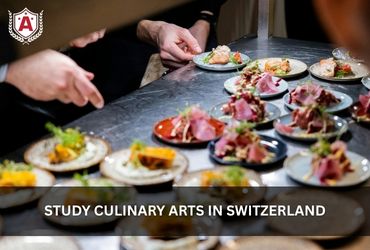 Have you ever thought about turning your passion for cooking into a professional career? Switzerland can be a very exciting option if you are planning to study culinary arts. It is well known for its hospitality background and high quality education. Switzerland is connected to different cultures and cuisines, so you can also get a chance to explore international cooking styles. At the same time, universities are highly affordable as compared to other countries. When it comes to career opportunities, culinary arts open many paths. You can work as a chef, pastry expert, kitchen manager or even move into a new food entrepreneurship. Some students also choose to continue their studies after completing their course. If you are someone who wants to build your career in this field, then our team of Anigdha is here to guide you.
Every university follows its own admission requirements, so it becomes important to understand them properly before you apply. Here we have explained the eligibility criteria separately for bachelor’s and master’s level.
Bachelors eligibility criteria
Application requirement: The application form can be accessed from the official website of the university you choose. You have to add your basic details and upload documents like marksheets, passport copy and a resume.
Educational requirement: You are required to complete your 10+2 education from a recognised board. Swiss universities usually expect marks between 50% to 65%. There is no strict subject requirement, so students from different streams can apply without any issue.
Global admission test: Entrance exams like SAT or ACT are generally not required for culinary courses. Some universities may conduct a simple internal evaluation or basic test but this is not common everywhere. It is always better to check once before applying.
Additional requirement: You can be asked to write a Statement of Purpose where you can explain your interest and future plans. If you have any experience related to cooking or workshops, you can include it in your application.
English proficiency requirement: If your course is in English, you need to show your English language ability through such accepted scores:
IELTS: between 5.5 to 6.0
TOEFL iBT: between 70 to 90
Duolingo: between 90 to 110
Master’s eligibility criteria
Educational requirement: You must have a bachelor’s degree in culinary arts, hospitality or a related field to apply. Swiss universities generally expect around 55% to 70% or equivalent marks.
Application requirement: The application process is completed through the official website where you need to submit your graduation documents, CV and passport copy. While applying, you should ensure that all your details are correct.
Additional requirement: At the master’s level, universities mostly expect practical exposure. This can include internships, training or any work experience. You may also need to submit a Statement of Purpose and recommendation letters.
English proficiency requirement: If your course is in English, you need to show your English language ability through such accepted scores:
IELTS: between 6.0 to 6.5
TOEFL iBT: between 80 to 100
Duolingo: between 100 to 120
Switzerland offers flexible intake options for culinary programs, especially in private universities. This gives you better flexibility compared to many other courses. Generally, the main intakes are April, July and October. These are the most commonly available options for all the courses. Along with these, some universities also provide additional intakes like January or February. This lets you plan smoothly even if you miss one intake or need extra time for preparation. Therefore, applications for this usually start 2 to 6 months before the intake and seats are limited so it is always recommended to apply as early as possible.
Here we have listed all the documents separately for bachelor’s and master’s level so you can prepare accordingly.
Documents required for bachelor’s degree
Your Class 10th and 12th marksheets from a recognised board.
A valid passport copy is mandatory during your visa process.
A school leaving certificate or transfer certificate.
A Statement of Purpose where you can explain your interest in culinary arts and your future plans.
One or two recommendation letters from your school teachers, if asked.
A proper CV or resume including your basic details, interests or any relevant experience.
English language test scores such as IELTS, TOEFL or Duolingo, if your course is in English.
Some recent passport size photographs as per the required format.
Financial documents such as bank statements or proof of funds.
Proof of application fee payment, if applicable.
Some universities may also ask for a basic medical fitness certificate.
Documents required for master’s degree
Your bachelor’s degree certificate along with semester-wise marksheets or transcripts.
A detailed CV or resume including your personal details, skills and any practical experience.
A Statement of Purpose explaining your interest in culinary arts and your career goals.
Two or more recommendation letters from your professors or supervisors.
Proof of internships, training or work experience, if you have any.
English language test scores such as IELTS, TOEFL or Duolingo, if your course is in English.
A valid passport copy for identity and visa purposes.
Your recent passport size photographs as per the required format.
Financial documents such as bank statements or sponsorship proof.
Medical fitness certificate, if required by the institute.
Proof of application fee payment for your records.
The duration of a bachelor’s degree in culinary arts is usually around 3 to 4 years. Some private universities may offer faster or intensive programs to complete the course in a shorter time.
At the master’s level, the duration is generally shorter and usually takes around 1 to 2 years to complete. This stage includes internships or industry projects so that you can get real world experience.
The language of instruction mainly depends on the type of university you choose. At the bachelor’s level, Swiss universities generally support local languages like German or French. If you are planning to apply there, you may need to show your proficiency before getting admission. At the same time, some private universities offer English language courses. This becomes a comfortable option for international students as they can study without worrying about a language barrier. However, when you choose an English language course, you will need to submit your language test scores as part of your application. The commonly accepted options include:
IELTS: between 5.5 to 6.0
TOEFL iBT: between 70 to 90
Duolingo: between 90 to 110
Switzerland has built a strong reputation in hospitality and culinary education. Here are some of the well-known universities you can consider for culinary arts in Switzerland:
| Name of the University | Category | City |
|---|---|---|
| Culinary Arts Academy Switzerland | Private | Lucerne |
| Business & Hotel Management School | Private | Lucerne |
| César Ritz Colleges Switzerland | Private | Bouveret |
| Swiss Education Academy | Private | Montreux |
| Hotel Institute Montreux | Private | Montreux |
Here is a clear overview of the fee structure in some of the top institutes offering culinary arts in Switzerland:
| Name of the University | Bachelors fees per year | Master's fees per year |
|---|---|---|
| Culinary Arts Academy Switzerland | The annual fee is usually around CHF 35,000 to 40,000. It includes practical training and student resources. | The fee can range between CHF 30,000 to 38,000. It depends on the course structure. |
| Business & Hotel Management School | The yearly cost is approximately CHF 38,000 to 41,000. It includes tuition and other basic facilities. | The fee is around CHF 39,000 to 40,000 for advanced culinary or postgraduate diploma programs. |
| César Ritz Colleges Switzerland | The annual fee is generally between CHF 30,000 to 35,000. It covers practical exposure and student services. | The master’s fee is usually around CHF 32,000 to 36,000. It depends on the course and duration. |
| Swiss Education Academy | The fee for bachelor’s programs is around CHF 25,000 to 32,000 per year. It is based on the course and campus. | The master’s fee may range from CHF 28,000 to 34,000. It depends on the program structure. |
| Hotel Institute Montreux | The bachelor’s fee is approximately CHF 28,000 to 33,000 per year. It includes learning resources and practical exposure. | The master’s level fee is usually between CHF 30,000 to 35,000. It depends on the specialization. |
Switzerland offers multiple scholarships and financial support options that can reduce your expenses. Most of them are either merit-based, need-based or university-specific. Swiss Government Excellence Scholarship is one of the most well-known scholarships which is mainly designed for international students who are applying for postgraduate studies. Apart from this, universities also provide their own scholarships. For example, institutes like Glion, Les Roches and EU Business School offer scholarships based on merit or even personal achievements. These scholarships can range from 10% to 50% of your tuition fee. Some universities also offer partial accommodation support or discounts on overall program cost.
Another best option is Merit-Based Scholarships. If you have scored good marks in your previous studies, you may apply for this. In simple words, the better your profile, the better your chances of getting a good scholarship.
Here we have explained the process separately for bachelor’s and master’s level so you can understand it clearly:
Admission steps for bachelor’s degree
The first step is to explore the different universities that offer culinary arts courses.
Take your time and compare their course and fee structure so you can choose what feels right for you.
After shortlisting your options, go through their eligibility criteria carefully. This lets you understand the university requirements.
Now start arranging your documents like your 10th and 12th marksheets, passport, SOP, resume and English test scores.
Once your documents are prepared, you can access the application form through the official website of the institute.
Upload all the required documents in the correct format and review your application once before submitting it.
Some universities may also connect for a short online interaction during your application process.
After submitting your application, you need to wait for the response. If your profile is selected, you will receive an offer letter.
After receiving the offer, you need to confirm your seat and pay the initial fee within the given time.
At last, start planning your travel and accommodation before you visit Switzerland.
Admission steps for master’s degree
The first step is to look for a university that offers advanced culinary programs. Compare the different options before applying.
Go through the eligibility details properly so that you are clear about the university requirements.
Now prepare your documents including your graduation transcripts, degree certificate, CV, SOP and recommendation letters. If you have any kitchen training or work experience, include it.
Access the application form from the official website and fill it carefully using all the required documents.
Some universities may schedule a short interview or an online interaction to test your interest in the field.
After submission, you need to wait for the decision. If selected, you will receive an offer letter from the institute.
Once you receive the offer, complete the process and pay the required fee within the given deadline.
At last, you can book your travel or accommodation before moving to Switzerland.
What is the duration of culinary arts courses in Switzerland?
The duration usually depends on the level of study. Bachelor’s programs generally take around 3 to 4 years while master’s courses can be completed in 1 to 2 years.
Do I need prior cooking experience to apply for culinary arts?
At the bachelor’s level, it is not required but some level of training or experience can be helpful at master's level.
Can I study culinary arts in Switzerland in English?
Yes, many private institutes offer culinary programs in English. You just need to meet the required English language scores like IELTS, TOEFL or Duolingo.
What is the average fee for culinary arts in Switzerland?
The fees can vary depending on the University. On average, it may range between CHF 25,000 to 40,000 per year including practical training and academic facilities.
Are scholarships available for culinary arts students?
Yes, some institutes offer partial scholarships based on your academic performance and profile. These usually provide a percentage reduction in tuition fees.
Can I work while studying culinary arts in Switzerland?
Yes, international students are allowed to work part time during their studies. This can help you manage your daily expenses like food, travel and basic needs.
Get free 1-on-1 counselling with our experts