Updated on Mar, 06 2026 12:06 IST
Study Electronic and Communication Engineering in Georgia





Test Preparations
About Us
Knowledge Hub

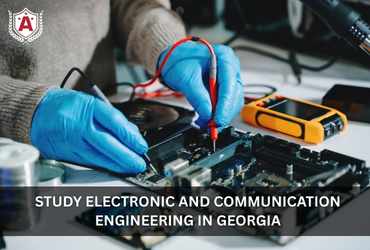 Lets start by first understanding what Electronic and Communication Engineering actually is. In simple words, it’s about electronics + communication systems. Like how mobile phones work, how internet travels, how satellites communicate, how TV broadcasting happens, how circuits are designed: All of this comes under the interesting field of Electronic and Communication Engineering. While you study electronic and communication engineering in Georgia, you’ll learn things like electronic circuits, digital systems, microprocessors, communication systems, signal processing, networking basics, maybe even about robotics or embedded systems. Sounds technical? Yes, it is a bit. But if you enjoy physics, math, and understanding how gadgets work, you might actually like it. Today everything runs on communication systems. Mobile networks, WiFi, satellites, defence systems, even smart devices at home: they all depend on electronics and communication engineers. So yeah, the demand is there. Now why study in Georgia? Many Indian students choose Georgia because they want a European degree but without spending a crazy amount of money. Countries like Austria and Hungary can be expensive. Georgia is comparatively affordable. It’s also safe, peaceful, and student-friendly. Many engineering programs are taught in English, so language won’t be a big issue. Let’s go step by step so you understand properly.
Eligibility remains the most important factor in your study abroad journey. Each foreign university will have a set of admission requirements to enrol students. If you are looking to study electronic and communication engineering in Georgia, you must fulfil these requirements:
For Bachelor’s in Electronic and Communication Engineering
You must complete 12th with science stream
Physics and Mathematics are compulsory
50–60% marks minimum are required by most universities in Georgia
For Master’s in Electronic and Communication Engineering
You need a Bachelor’s degree in ECE or related engineering field
At least 60% marks or more are expected
English Language Requirement: Most universities will ask for:
IELTS – 6.0 or above
TOEFL – around 70–80
Some universities may conduct an interview instead.
Do not ignore this part. Documentation is a super important aspect of the study abroad process. Many students make small mistakes and miss to organise their papers only to regret at a later stage. Here is a detailed list to help you out: You will need:
Academic Documents:
12th mark sheets (for Bachelor’s)
Bachelor’s degree certificate (for Master’s)
Semester-wise transcripts
Language Documents:
IELTS/TOEFL scorecard
Identity Documents:
Valid passport
Birth certificate
4–6 passport-size photographs
Financial Documents:
Bank statements
Proof of funds
Sponsorship letter
Application Documents:
Completed application form
Statement of Purpose
CV/Resume (for Master’s)
Letters of Recommendation
Health & Visa Documents:
Medical fitness certificate
Health insurance
Student visa application form
Tuition fee payment receipt
Georgian universities remain a top choice for Indian students to study electronic and communication engineering programs in Europe. If you are planning to study an English-taught engineering program in the country, here are some institutions you can consider:
Georgian Technical University - Programs Offered:
Bachelor of Science (BSc) in Electronic Engineering
Master of Science (MSc) in Electronic and Communication Engineering
MSc in Telecommunications
Caucasus University - Programs Offered:
Bachelor’s in Engineering (Electronics-related programs)
Master’s in Engineering Management / Technology fields
European University - Programs Offered:
Bachelor’s in Electronic Engineering
Master’s in Technology and Engineering Programs
Ilia State University - Programs Offered:
Bachelor’s in Engineering Sciences
Master’s programs in Electronic and Communication-related fields
International Black Sea University - Programs Offered:
Bachelor’s in Engineering (Electronics specializations)
Master’s in Engineering and Technology fields
One big reason why Indian students choose to study in Georgia is affordability. Public universities charge on the lower side while private universities may charge a bit more. For electronic and communication engineering programs, tuition fees range is between:
| University | Program | Annual Tuition Fee |
|---|---|---|
| Georgian Technical University | BSc / MSc ECE | €3,000 – €5,000 |
| Caucasus University | Engineering Programs | €4,000 – €6,000 |
| European University | Electronics Programs | €3,500 – €5,000 |
| Ilia State University | Engineering Sciences | €3,000 – €4,500 |
| International Black Sea University | Engineering Programs | €4,000 – €5,500 |
You can study in Georgia without burning a hole in your pocket due to low fee structure in Georgian universities. If you are still looking for funding options, we must tell you that scholarships in Georgia are limited. Don’t fully depend on them. There are:
Some government available for limited number of programs and very few seats. The competition is also very high.
Merit-based discounts from universities
If your academic record is strong, you might get partial fee waiver and accommodation support. But you must apply early.
The time you are expected to spend on completing a course largely depends on the degree level. If you are planning to study electronic and communication engineering in Georgia, here are the general course duration details for the program:
Bachelor’s degree – 4 years
Master’s degree – 2 years
Georgian universities offer two main intakes for engineering programs. It is strongly recommended that you apply at least 3–4 months before the intake begins. Apply at least 3–4 months before. Last-minute rush creates unnecessary tension. Here are the details to help you get prepared on time:
Fall Intake (Main Intake):
Starts: September
Application Period: February to May
Spring Intake (Limited Programs):
Starts: February
Application Period: October to December
An expert consultant like Anigdha can make the whole study abroad process so easy and simple for you. We help our students from start to end. If you wish to study in Europe, here is how the whole process will be simplified by our expert team:
Choosing the Right University: First of all, we will help you choose the right university step by step. We check the tuition fees, the subjects they are teaching, and whether the degree actually matches your requirements or not. The final decision will depend on your career goals, budget, and other requirements.
Checking Your Eligibility: After selecting the university, we check if you are eligible. This means we see your marks and confirm whether you studied the required subjects. We also check if the university needs an English test or if they take an interview. We will guide you properly so you don’t get confused.
Preparing Your Documents: It is always better to keep a proper file and arrange everything neatly. We help you collect all documents like your marksheets, passport, photographs, bank proof, and test proof. When everything is properly organised, things become much smoother.
Submitting Your Application: Then we carefully fill out the university application form. Even small spelling mistakes can create problems, so we double-check everything. After that, we upload or send your documents to the university.
Getting Your Offer Letter: If your application is approved, you will receive an offer letter from the university. It means the university is ready to give you admission once you complete the remaining formalities.
Fee Payment: After receiving the offer letter, you need to pay the tuition fee to confirm your seat. If you don’t pay before the deadline, your seat can be given to another student. Once the payment is done, the university sends you a final admission or confirmation letter.
Visa Application: Next step is applying for the student visa. We help you prepare all the required visa documents as per the embassy checklist. The visa process may look long, but if your documents are correct, it goes smoothly. Just follow the embassy rules properly.
Travel Arrangements: Once your visa is approved, we help you book your flight and arrange your hostel or accommodation. It is always better to reach Georgia a few days before your classes start. You can also connect with our local support team in Georgia if you need any help.
Is electronic and communication engineering difficult?
It can be challenging because it involves math and physics. But if you are consistent and attend classes properly, it’s manageable.
Do I need strong math skills to study electronic and communication engineering in Georgia?
Yes. Basic to good math skills are important. Engineering without math is almost impossible.
What industry I can consider to get a job after I study electronic and communication engineering in Georgia?
You can work in: Telecommunications, Electronics manufacturing, Networking companies and IT companies
Can I work part-time while studying?
Yes. You can work as per visa rules. But don’t depend completely on part-time income to cover all expenses as opportunities may be limited.
Is Georgia safe for Indian?
It’s considered safe and peaceful for international students. Just be sensible like you would anywhere.
Get free 1-on-1 counselling with our experts