Updated on Jan, 15 2026 06:50 IST
Higher Studies in Germany





Test Preparations
About Us
Knowledge Hub


Team Anigdha
Update on - 15 Jan 2026
 Are you thinking about pursuing higher studies in a country that gives the best quality education? Germany is one of the most popular choices for international students because it offers high quality education along with practical skills. Universities here charge very low tuition fees to offer highly affordable and stress free education. The courses are specifically designed with a practical approach and advanced research. Many programs are also taught in English to support international students. However, Germany offers a safe living environment along with reliable healthcare facilities. It is also a great place to enjoy cultural experiences, gain global exposure and work part time during studies. If you want to pursue higher studies in Germany, Anigdha will be here to guide you at every step.
Here are simple reasons that make Germany a good choice for higher education:
Best quality education: Germany offers a strong and trusted education. Universities are known for providing practical learning and real skills so that students can understand subjects better.
Low study cost: Public universities in Germany charge very low or no tuition fees. This makes higher studies affordable so students can focus on learning without stress about money.
Wide course: Germany offers many programs in engineering, science, health, management and technology. This wide range can help them choose courses that match interests and support future goals.
Excellent career opportunities: Germany allows part time work during studies and supports job opportunities after graduation. Many global companies operate here so students can gain experience and build long term careers.
Safe and secure environment: Germany offers a safe and organized lifestyle. It is known for its secure transport and advanced healthcare so that international students can live comfortably and focus on studies.
Global recognition: German degrees are widely accepted around the world. After graduation, students can access better job opportunities and build strong careers across different countries.
Here are the most popular higher studies programs chosen by international students in Germany:
Engineering
Computer Science
Information Technology
Data Science
Artificial Intelligence
Cyber Security
Business Administration
Management Studies
Finance
Economics
Mechanical Engineering
Electrical Engineering
Civil Engineering
Automotive Engineering
Biotechnology
Environmental Science
Medicine
Public Health
Architecture
Design
Physics
Chemistry
Mathematics
This section explains the basic rules for higher studies in Germany. The points are written separately for bachelor’s and master’s programs:
Bachelor’s eligibility criteria
Academic qualification: Students are required to complete Class 12 or an equivalent school qualification from a recognized board.
Required subjects: Students are required to study Mathematics or Science subjects in Class 12. These subjects build a strong base in engineering, science, business and technology programs.
Minimum marks: Most public universities require at least 60 percent marks in main Class 12 subjects. This level shows academic knowledge and supports bachelor programs.
Entrance test: School certificates must meet German university entry standards. Some students may need to complete a preparatory course before starting bachelor studies in Germany.
Application form: Applications are submitted online through the university website or the Uni Assist portal. All details must be completed correctly before the official application deadline.
Health insurance: A valid health insurance is required throughout the full study period. This coverage supports medical needs and meets university and legal requirements in Germany.
Financial proof: Proof of sufficient funds is required to cover living expenses. This supports trust in financial stability during studies.
Language requirement: Students need to show language proficiency based on the course language. Here are some accepted language scores:
IELTS:6.0 or above
TOEFL iBT: 80 or above
Duolingo: 95 or above
Master’s eligibility criteria
Degree requirement: A recognized bachelor’s degree is required to apply for a master’s program in Germany. This qualification is used to check their knowledge and skills.
Academic background: Bachelor subjects must closely match the chosen master’s program. This subject will help manage academic workload and understand course content smoothly.
Minimum marks: Most universities require 65 to 70 percent marks in the bachelor’s degree. However, strong academic performance supports admission approval.
Application form: Applications are submitted online through the university portal or the Uni Assist system before the announced deadline.
Mandatory documents: It includes documents such as degree certificates, transcripts, resume, motivation letter and recommendation letters.
Study motivation: A clear motivation letter is required that explains academic goals and future plans. Universities use this to assess course interest and commitment.
Health insurance: Students are required to have active health insurance. This requirement supports enrollment and legal stay in Germany.
Financial proof: Proof of funds is required to cover living costs. This proof supports both admission and visa processing stages.
Language requirement: Language proficiency is required based on the program language. Good language skills support effective learning and participation. Here are some accepted Language Scores
IELTS:6.5 or above
TOEFL iBT: 85 or above
Duolingo: 100 or above
This section explains all important documents required to apply for bachelor’s level higher studies in Germany in a simple and clear way.
A valid passport copy that remains active for the full study period.
A recent passport size photograph with a clear and plain background.
Class 10th and 12th mark sheet issued by a recognized education board.
Class 12 passing certificate from the school or board.
School leaving certificate provided by the last attended institution.
A properly filled and signed university application form.
A simple motivation letter explaining your study goals.
A basic CV with personal and academic details.
English or German language test score report if required.
Proof of financial support for living and study expenses.
Health insurance proof valid in Germany.
Blocked account confirmation if requested by the university.
Official admission letter received from the German university.
A complete visa application document.
Here are some documents required for Master’s programs:
A valid passport copy that remains active during the study period.
A recent passport size photograph with a clear background.
Bachelor’s degree certificate issued by a recognized university.
All semester mark sheets from the bachelor’s program.
A correctly filled and signed university application form.
An updated CV with education and skills details.
A statement of purpose written in clear and simple language.
Letters of recommendation from academic or professional referees.
English or German language proficiency test score report.
Proof of financial support for living expenses in Germany.
A valid health insurance covering the full study duration.
Blocked account confirmation for financial requirements.
Official admission letter issued by the German university.
Research proposal if required by the selected program.
Work experience certificate if available.
A complete study visa application document.
Germany has many well-known universities that offer quality education with strong academic support and practical learning. These top universities are popular among international students as they provide good career opportunities after graduation:
| Name of the University | Category | City |
|---|---|---|
| Technical University of Munich | Public | Munich |
| Ludwig Maximilian | Public | Munich |
| Heidelberg University | Public | Heidelberg |
| RWTH Aachen University | Public | Aachen |
| Humboldt University of Berlin | Public | Berlin |
If you are planning higher studies in Germany, choosing the right language is an important decision. Germany offers courses in two main languages, English and German. Many international students prefer English because it feels comfortable and familiar for academic learning. English taught programs ask for an academic language test to check reading, writing and understanding skills. Therefore, learning basic German is also a good advantage. It helps with daily communication, part time work and managing life outside the classroom.
Here are some widely accepted language scores for English taught program:
IELTS:0 to 6.5 or above
TOEFL iBT: 80 or above
Duolingo English Test: 95 or above
Germany is known for affordable studies. Universities here charge very low tuition, with only a small semester fee so that students can focus on learning without heavy financial pressure.
| Name of the University | Bachelor’s fees structure | Master's fee structure |
|---|---|---|
| Technical University of Munich | At Technical University of Munich, bachelor’s programs for non?EU students cost around €2,000 to €3,000 per semester. There is also a small semester contribution for student services and campus support. | Master’s programs at Technical University of Munich for non?EU students cost around €2,000 to €3,000 per semester. Students also pay a small semester fee for student services and campus facilities |
| Ludwig Maximilian University of Munich | At Ludwig Maximilian University of Munich, bachelor’s courses usually do not charge tuition fees. However, a semester fee of about €100 to €300 is paid for services and local transport. | At Ludwig Maximilian University of Munich, most master’s courses do not include tuition fees. However, a semester contribution of about €100 to €300 is paid for administrative support and transport. |
| Heidelberg University | Heidelberg University charges about €1,500 per semester for bachelor’s programs for non?EU students. There is also a small semester contribution to support campus facilities and student services. | Heidelberg University charges around €1,500 per semester for master’s programs for non?EU students. There is also a small semester fee that helps provide student support and campus services. |
| RWTH Aachen University | RWTH Aachen University does not ask for regular tuition fees for bachelor’s programs. Instead, students pay about €280 to €300 per semester for student support and public transport access. | Master’s programs at RWTH Aachen University are generally free of tuition fees. Instead, students pay a semester contribution of around €280 to €300 for student services and public transport. |
| Humboldt University of Berlin | At Humboldt University of Berlin, bachelor’s programs are mostly free of tuition charges. Students still pay a semester contribution of about €300 to €350 for services and transport. | At Humboldt University of Berlin, master’s programs usually do not charge tuition fees. Students pay a semester contribution of about €300 to €350, which supports campus services and transport. |
Germany offers many scholarships that help students study without worrying about money. These scholarships can support tuition fees, living costs, travel and health insurance. The DAAD scholarship is one of the most popular options as it offers monthly expenses and study support. The Deutschlandstipendium scholarship focuses on talented students and provides a fixed monthly amount with help of government and private sponsors. Many German universities also offer their own scholarships to support students during higher studies. The Erasmus Plus scholarship is the best choice for students who want to study or exchange programs in Europe. Some scholarships also focus on research students and doctoral studies. Therefore, these scholarships are making higher studies easier, affordable and more comfortable for international students.
Each step is simple and easy to follow so students can understand and complete the process without confusion:
Bachelor’s Admission Procedure
Choose a bachelor’s course that matches your Class 12 subjects and personal interests. Make sure the course fits your future goals and check the language used in classes.
Check if your school certificates meet German university rules. If required, complete a foundation or preparatory course before applying to the main bachelor’s program.
Collect all the documents such as class 10 and 12 marksheets, school leaving certificate, passport copy, recent photographs and a short letter explaining your study goals.
Arrange valid English or German language test scores if needed. Provide IELTS, TOEFL or TestDaF scores to prove your language ability.
Fill and submit the online application through the university website or Uni Assist portal. Make sure all details are correct and documents are uploaded properly.
Wait for the university to check your academic records and documents. Reply quickly if they ask for more information to avoid delays.
Receive the admission letter by email or portal. Read all instructions carefully and confirm your seat on time.
Prepare proof of finances and health insurance. Complete enrollment after reaching Germany to start studies without any problem.
Master’s admission procedure
Choose a master’s program that matches your bachelor’s degree subjects and career goals. Make sure the course fits your academic background.
Collect all documents like bachelor’s degree certificate, semester transcripts, resume, recommendation letters and a statement explaining your study goals.
Arrange English or German language test scores as required by the university. Also provide valid IELTS, TOEFL or TestDaF results.
Submit your complete application online through the university website or Uni Assist portal. Check all documents carefully before sending.
Wait while the university reviews your marks, previous subjects, language scores and statements. Provide extra documents if the university asks.
Receive the conditional or final admission letter after approval. Confirm your seat quickly to secure your place in the program.
Arrange proof of finances and valid health insurance. Prepare all documents for enrollment and visa before traveling. Start your studies smoothly after arriving in Germany.
What is the cost of studying higher education in Germany?
Most public universities in Germany charge very low or no tuition fees. Students only need to cover living expenses, health insurance and semester contributions. This makes studying very affordable.
How long does a master’s program take in Germany?
A master’s program usually takes two years to complete. Some specialized courses can be shorter while research-based programs may take longer depending on the field of study.
Are there scholarships available for higher studies in Germany?
Yes, Germany offers many scholarships for international students. These include DAAD scholarships, university funded programs and research grants that can cover tuition, living costs and even travel expenses.
What is the language requirement for higher studies in Germany?
Students must prove proficiency in the language of instruction. English programs need IELTS or TOEFL while German programs require TestDaF or DSH scores for proper communication and learning.
Can international students work while studying in Germany?
International students can work part time for up to 20 hours per week during the semester. This helps manage living costs and gain experience while continuing studies effectively.
How can I apply for a higher studies program in Germany?
Students can apply online through the university website or Uni Assist portal. They must submit all documents, language scores and motivation letters before the application deadline to secure admission.
Is it safe to study in Germany?
Yes, Germany is very safe for students, offering a secure environment, reliable public transport and strong student support services across major cities.
Get free 1-on-1 counselling with our experts

Do you want to study abroad but worry about high tuition fees? Are you looking f...
January, 16 2026
Have you ever paused to think about how technology, science and engineering shap...
January, 15 2026
Have you ever thought about studying science, technology, engineering or mathema...
January, 15 2026
Are you interested in studying abroad but want your course to be in English? Ger...
January, 15 2026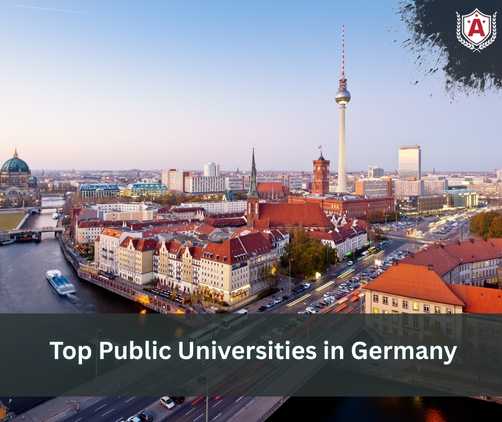
Are you thinking about studying at the best public universities in the world? Ge...
January, 15 2026
Are you thinking about pursuing higher studies in a country that gives the best ...
January, 15 2026
Are you planning to study in Germany and want to explore good education with exc...
January, 15 2026
Are you ready to pursue a master’s degree in Germany and enjoy top quality edu...
January, 14 2026