Updated on Jan, 07 2026 11:56 IST
Study in Germany for Free





Test Preparations
About Us
Knowledge Hub


Team Anigdha
Update on - 31 Dec 2025
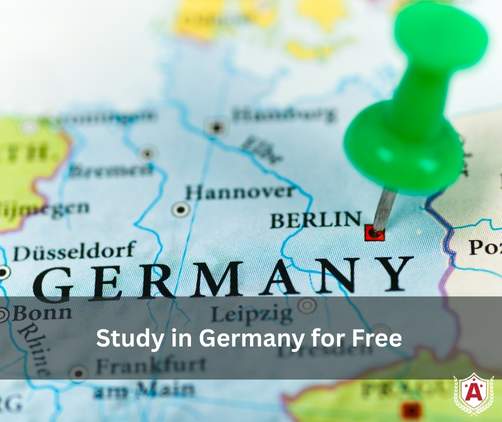 Do you ever wonder if it is really possible to study abroad without paying high tuition fees? Many students ask this question when they dream of studying in Europe. Studying in Germany can turn this dream into reality for international students. Today, Germany offers strong education, modern universities and globally valued degrees. Public universities in Germany usually charge very low or no tuition fees for both bachelor’s and master’s programs. Students only need to pay a small semester contribution to cover basic services and transport. This system allows them to focus more on learning and less on financial pressure. Many programs are also taught in English, which makes learning easier for international students. Along with education, Germany offers a safe environment, good student support and strong career opportunities after graduation. However, it can help them explore different fields, gain practical knowledge and build a future with confidence. If you are planning to study in Germany for free, Anigdha is here to guide and support you throughout the entire journey.
Here is a clear explanation of all basic requirements that students need before applying to study in Germany for free. The criteria are listed separately for bachelor’s and master’s programs to make everything easy to understand.
Bachelor’s Eligibility Criteria
Academic qualification: Students should complete Class 12 or an equivalent school education from a recognized board before applying to bachelor’s programs in Germany.
Required subjects: Mathematics is important for most courses. Subjects like Physics, Chemistry, Biology or Computer Science may be needed depending on the chosen field.
Minimum marks: Many public universities prefer students with good academic records, usually around 60 percent or above in main subjects.
University entry qualification: School certificates must be recognized as equivalent to the German university entrance level. Some students may also need a foundation or preparatory course.
Application process: Students must fill and submit the online application form through the university portal or Uni Assist system before the deadline.
Health insurance: A valid health insurance is required before enrollment in a public university in Germany.
Financial proof: Even though tuition is free, students must show basic financial support for living costs.
Language requirement: Students must prove language ability based on the program language. This helps in learning and communication during studies. Here are certain required minimum scores:
IELTS:0 or above
TOEFL iBT: 80 or above
Duolingo: 95 or above
Master’s Eligibility Criteria
Degree requirement: Students must complete a bachelor’s degree from a recognized university before applying for a master’s program in Germany.
Relevant field: The bachelor’s degree should match the chosen master’s field for better academic progress.
Minimum marks: Public universities usually expect a strong and steady academic record during undergraduate studies.
Course matching: Universities check if the subjects studied during bachelor’s match the chosen master’s program.
Application submission: Students must complete and submit the online application form through the university website or Uni Assist portal.
Supporting documents: It includes documents such as degree certificate, all semester transcripts, passport copy, resume, statement of purpose and recommendation letters.
Motivation: A clear explanation of study goals helps universities understand why the student wants to study the master’s program.
Health insurance: A valid health insurance is compulsory for the entire duration of study in Germany.
Financial proof: Even though the tuition is free, students must show proof of sufficient funds for living expenses.
Language requirements: Students must prove language proficiency based on the language of instruction used in the program. Here are some required scores:
IELTS:5 or above
TOEFL iBT: 85 or above
Duolingo: 100 or above
Here is a clear list of documents students must prepare to apply for bachelor’s and master’s programs in Germany.
Documents required for bachelors program:
A valid passport copy showing clear information about the student.
Class 10 mark sheet to show basic school education.
Class 12 mark sheet or equivalent certificate as proof of completed senior secondary school.
School completion certificate or diploma from a recognized board.
Academic transcripts with subject wise marks and grades.
English language proficiency proof if the program is taught in English.
German language certificate if the program is taught in German.
Motivation letter explaining why the student wants to study in Germany.
Updated resume or CV with academic background and activities.
Passport size photographs with plain background.
Letter of recommendation from school teachers.
Financial proof showing enough funds to support living expenses in Germany.
Health insurance proof to show valid medical coverage.
University application form filled and signed properly.
Proof of payment of application fees if the university requires it.
Documents Required for Master’s Programs: Students applying for master’s programs in Germany for free should prepare the following documents:
A valid passport copy with personal details.
Bachelor’s degree certificate showing the qualification earned.
Complete academic transcripts from all semesters of the bachelor’s program.
English language scores such as IELTS or TOEFL for English taught programs.
German language certificate for German taught programs.
Motivation letter explaining interest in the master’s course and future goals.
Updated resume or CV with academic, project and work details.
Letters of recommendation from college professors or supervisors.
Statement of purpose that explains study plans clearly.
Proof of sufficient funds to support living costs during studies.
Health insurance proof showing valid coverage in Germany.
Passport size photos with a plain background.
Admission or acceptance letter from the German university.
Proof of application fee payment if any university charges it.
These documents are important for both university admission and student visa processing. Therefore, it is important for students to arrange them carefully and keep them ready before applying.
Students who want to study in Germany for free should know the intake dates clearly. Most public universities in Germany follow the winter intake, which usually begins in September or October every year. Applications for this intake generally open around January to May, so students must start preparing well in advance. A few universities also offer the summer intake, which usually begins in March or April each year. Since studying in Germany for free is very popular, it is important to apply early. Early planning gives enough time to prepare documents, get admission letters, arrange finances and complete the visa process. Therefore, it helps students avoid last minute stress and start their academic journey smoothly.
When you plan to study in Germany for free, you must show that you can understand the language used in your course. Many bachelor’s programs are taught in German, so students need to prove their German skills first. Some master’s programs are also taught in English, which makes it easier for international students. This will allow a student to understand lectures, follow instructions and communicate clearly with the professors. However, it can make their daily life easier. Since language rules change based on the university and course, checking the exact language test requirement before applying is always important.
Here are the commonly accepted language scores:
English taught programs:
IELTS: 6.0 or above
TOEFL iBT: 80 or above
Duolingo English Test: 95 or above
German taught programs:
TestDaF: Level TDN 4 or above
DSH: Level DSH?2 or above
| Name of the University | Bachelors fees per year | Masters fees per year |
|---|---|---|
| Ludwig Maximilian University of Munich (LMU) | Most bachelor’s programs have no tuition fees. Students pay a small semester fee of around €100 to €150, which covers student services and admin charges. | Master’s programs are generally tuition free. Students only pay a small semester contribution of about €100 to €150 per term. |
| Technical University of Munich (TUM) | TUM does not charge tuition fees for most public bachelor’s programs. Students pay a minimal semester fee of around €130 to €150. | Most master’s courses are also tuition free with a small semester charge of about €130 to €150. |
| Humboldt University of Berlin | Most bachelor’s programs do not have tuition fees. A small semester contribution of around €300 is required for services and transport. | Master’s degrees are mainly tuition free. Students pay a similar semester fee of around €300 each term. |
| RWTH Aachen University | Public bachelor’s programs at RWTH are tuition free. Students commonly pay a semester fee of about €300 to €350 | Master’s courses generally do not charge tuition fees. Students pay a semester contribution of around €300 to €350. |
| Free University of Berlin | Most bachelor’s programs do not have tuition charges. Students pay a semester contribution of about €300. | Master’s programs are tuition free at the public level. Students pay the semester fee of around €300. |
Note: Public universities in Germany usually do not charge tuition fees but students still pay a small semester contribution. This amount varies by university and helps cover basic services, student support and public transport.
| Name of the University | Category | City |
|---|---|---|
| Ludwig Maximilian University of Munich | Public | Munich |
| Technical University of Munich | Public | Munich |
| Humboldt University of Berlin | Public | Berlin |
| RWTH Aachen University | Public | Aachen |
| Free University of Berlin | Public | Berlin |
These are some of the top public universities in Germany that offer very low or no tuition fees for both bachelor’s and master’s programs. These universities help students study with minimal cost while providing quality education and strong academic support.
If you are willing to study in Germany without spending much. Germany supports this dream through different scholarship options for international students. These scholarships help students manage living costs and daily study expenses during their stay. Some scholarships come from the German government, while others are offered by universities and private groups. Students can apply based on academic performance, financial need or interest in learning and research. Many programs also support students who show strong motivation and clear career plans. These scholarships allow students to focus on studies and enjoy student life in Germany. Therefore, early planning and timely applications can make your journey smooth.
Here is the list of documents required for Bachelor’s and Master’s Programs in Germany:
Admission procedure for bachelor’s degree in Germany for free
Begin by choosing a bachelor’s program at a public university in Germany.
Select a course that matches subjects studied in Class 12.
Arrange language proof such as IELTS or a German language certificate early.
Collect academic records, school certificates and a valid passport carefully.
Submit the application through the university website or the Uni Assist portal.
Universities will thoroughly check your academic marks and language scores.
Selected students will receive an admission offer after successful evaluation.
Apply for a German student visa using the offer letter.
Arrange financial proof and health insurance for visa approval.
Reach Germany, visit university and complete your final enrollment.
Admission procedure for master’s degree in Germany for free
Start by selecting a master’s program related to the previous bachelor’s degree.
Make sure the chosen course matches your academic background and subject knowledge.
Prepare language test scores such as IELTS, TOEFL or German certificates.
Get ready with documents such as academic transcripts, SOP, CV and passport copies in advance.
Apply through the official university portal or the Uni Assist system.
Universities assess academic performance and course suitability carefully.
Selected students will receive an admission offer through email or online portal.
Apply for a German student visa after receiving the offer letter.
Arrange financial documents and health insurance for visa processing.
Reach Germany, arrive at the university and complete your final registration.
Can international students study in Germany for free?
Yes, many public universities in Germany do not charge tuition fees for both EU and non-EU students. They only require a small semester contribution.
Do I need to pay any fees at all while studying in Germany?
Yes, public universities ask for a small semester fee. This usually covers administration costs, student services and local transport support.
Is IELTS required to study in Germany for free?
Many English-taught programs ask for IELTS or TOEFL scores. Some universities accept proof of previous English education instead.
Can I work while studying in Germany?
Yes, part-time work is allowed. This helps manage daily living costs while gaining useful work experience.
Is Germany safe for international students?
Yes, Germany offers a safe and welcoming environment. Universities here provide strong support services and guidance for all international students.
Are scholarships available even if education is free?
Yes, several scholarships support living expenses, health insurance and monthly costs during the study period.
Get free 1-on-1 counselling with our experts

Do you want to study abroad but worry about high tuition fees? Are you looking f...
January, 16 2026
Have you ever paused to think about how technology, science and engineering shap...
January, 15 2026
Have you ever thought about studying science, technology, engineering or mathema...
January, 15 2026
Are you interested in studying abroad but want your course to be in English? Ger...
January, 15 2026
Are you thinking about studying at the best public universities in the world? Ge...
January, 15 2026
Are you thinking about pursuing higher studies in a country that gives the best ...
January, 15 2026
Are you planning to study in Germany and want to explore good education with exc...
January, 15 2026
Are you ready to pursue a master’s degree in Germany and enjoy top quality edu...
January, 14 2026