Updated on Apr, 24 2026 11:35 IST
Study Mechanical Engineering in Switzerland





Test Preparations
About Us
Knowledge Hub

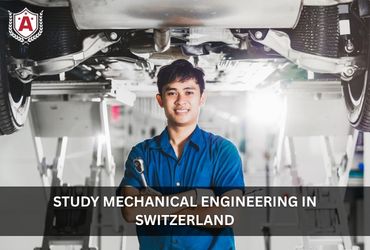 Have you ever wondered how machines inside industries actually work? If this field genuinely interests you, then studying mechanical engineering in Switzerland can be a good option for you. This course will let you explore areas like automation, robotics, manufacturing technology and industrial innovation. Switzerland gives you a strong environment where you can study these concepts in a more practical way. In some universities, students also will get to work on laboratory projects or industry related training during their course. Along with this, Switzerland also gives a safe and peaceful environment. After completing mechanical engineering from Switzerland, students can explore different career opportunities in areas like automotive engineering, robotics, manufacturing industries, energy systems, product design and industrial technology. If you are planning to build your future in this field, then our team at Anigdha is here to guide you through every step of the process.
If you are planning to move ahead with mechanical engineering in Switzerland, it is always better to check what is actually required for admission. To make things clear, here is how the eligibility works at both levels:
Bachelors eligibility criteria
Application requirement: You have to submit your application form through the official university portal. While filling the form, you will be asked for some basic documents like your academic marksheets, passport copy or resume etc. In a few cases, universities may also connect with you for an online interaction.
Educational requirement: You should complete your 10+2 education from a recognised board with subjects like Physics and Mathematics. Swiss universities generally expect around 60% to 75% marks.
Global admission test: There is no strict requirement for exams like SAT or ACT in Swiss universities. Still, if you already have a score, you can include it as an added advantage for your profile.
Additional requirement: You may be asked to submit a statement of purpose where you can explain your interest in mechanical engineering. If you have participated in any science exhibitions, technical competitions or related activities, you should include that as well.
English proficiency requirement: If you want to study in English, you need to show your language ability through accepted scores:
IELTS: around 5.5 to 6.0
TOEFL iBT: around 70 to 85
Duolingo: around 90 to 110
Master’s eligibility criteria
Educational requirement: You need to complete your bachelor’s degree in mechanical engineering or a related field such as industrial, manufacturing or automotive engineering. Swiss universities generally expect around 60% or above in your graduation.
Application requirement: You have to apply through the university’s official website and upload your degree certificate, transcripts, passport copy and CV. Some universities may also ask for a statement of purpose to explain your interest and future plans in this field.
Additional requirement: If you have done internships, projects or any work experience related to engineering, include it in your application. Some universities may also ask for recommendation letters from your professors or employers.
English proficiency requirement: Since the course level is advanced, the required scores are slightly higher:
IELTS: around 6.0 to 6.5
TOEFL iBT: around 80 to 95
Duolingo: around 100 to 115
The most common intake for mechanical engineering programs is the Fall intake, which usually begins around September. It is available for all the courses and generally open between November or December and continue till February or March. Some universities may extend the deadline till April but it is always safer to complete your application early so you have enough time for document preparation and visa processing. There is also a Spring intake which usually starts around February. This intake is available in limited universities. Applications for this intake generally start around July or August and close between October to November. In some private universities, you may also find multiple intakes in a year. This gives you more flexibility in case you miss one cycle.
Once you move ahead with your application, the next thing you should focus on is keeping your documents ready. Here is a clear list of documents you may need for both levels:
Documents required for bachelor’s degree:
You will need your 10th and 12th marksheets along with passing certificates from a recognised board.
If your documents are not in English, you should arrange officially translated copies.
A valid passport for the entire duration of your course.
Your recent passport size photographs as per the university guidelines.
Create a statement of purpose explaining your interest in mechanical engineering and your future plans.
A CV or resume including your academic details, school activities or any achievements should be included.
Some universities may ask for one or two recommendation letters from your teachers.
You need to submit your English language test scores such as IELTS, TOEFL or Duolingo if your course is in English.
If there is any application fee, keep the payment receipt safely for future use.
Financial proof such as bank statements or sponsor letters is required, especially for visa purposes.
In some cases, universities may also ask for a medical fitness certificate or health insurance proof.
Documents required for master’s degree:
You will need your bachelor’s degree certificate along with all semester wise mark sheets from a recognised university.
A valid passport is compulsory, similar to bachelor programs.
Your recent passport size photographs should be submitted as per the given format.
You need to write a statement of purpose where you clearly explain your academic background and career goals.
Create a CV including your education, internships, projects and any work experience.
Some universities will ask for recommendation letters from your professors or employers.
If you have done internships or worked on any technical projects, you should provide related certificates or proof.
English language proficiency scores such as IELTS, TOEFL or Duolingo are required as per the course requirement.
Some universities may ask for additional documents related to your technical skills or project work.
Application fee payment receipt should be kept as proof.
Financial documents like bank statements or sponsorship letters will be needed for further process.
In some cases, a health certificate or insurance proof may also be required.
The bachelor’s level courses are mostly available in local languages like German or French. On the other hand, some private universities also offer programs in English, which makes the process easier if you are not familiar with local languages. At the master’s level, you will notice more flexibility. Universities usually support English programs, especially for specialised fields like mechanical engineering. If you choose an English based course, you will need to submit proof of your language ability. The commonly accepted scores usually fall in this range:
IELTS: around 6.0 to 6.5
TOEFL iBT: around 80 to 95
Duolingo: around 100 to 115
A bachelor’s degree in mechanical engineering in Switzerland usually takes around 3 to 4 years to complete. It is divided into six semesters where you can study core subjects like thermodynamics, mechanics, manufacturing systems and machine design.
A master’s degree in mechanical engineering usually takes around 1.5 to 2 years in Switzerland. At this stage, students will get the chance to move towards a specialised area such as robotics, energy systems, automotive engineering or advanced manufacturing.
Switzerland is well known for its strong engineering education and advanced research environment. To make your search easier, here are some of the popular universities you can consider for mechanical engineering in Switzerland:
| Name of the University | Category | City |
|---|---|---|
| ETH Zurich | Public | Zurich |
| EPFL | Public | Lausanne |
| University of Applied Sciences and Arts Northwestern | Public | Brugg-Windisch |
| Lucerne University of Applied Sciences and Arts | Public | Lucerne |
| Swiss School of Business and Management | Private | Geneva |
The cost of studying mechanical engineering in Switzerland usually depends on the type of university you choose. Public universities are generally more affordable than private institutions and they have higher tuition costs because of their facilities and practical training. Here is a simple overview of the fee structure in some popular universities:
| Name of the University | Bachelor's fees per year | Master's fees per year |
|---|---|---|
| ETH Zurich | The bachelor’s fee is generally around CHF 1,200 to 1,800 per year. It mainly covers tuition and basic academic charges. | The master’s fee usually ranges between CHF 1,500 to 2,000 per year. It depends on the program structure. |
| EPFL | The yearly fee is approximately CHF 1,200 to 1,500. Students can also get access to research and laboratory facilities. | The master’s fee is around CHF 1,500 to 2,500 per year. It mainly includes academic and technical resources. |
| University of Applied Sciences and Arts Northwestern | The bachelor’s fee can range between CHF 1,000 to 2,000 per year for international students. | The master’s fee is usually around CHF 1,500 to 3,000 per year. It depends on the specialization. |
| Lucerne University of Applied Sciences and Arts | The annual fee is approximately CHF 1,600 to 2,200. Additional technical workshop costs may apply separately. | The master’s fee generally falls between CHF 2,000 to 3,500 per year. |
| Swiss School of Business and Management | The bachelor’s fee is around CHF 8,000 to 12,000 per year. It depends on the course structure. | The master’s fee usually ranges from CHF 10,000 to 15,000 per year including academic support services. |
Note: Along with tuition fees, students should also plan for accommodation, food, transport, insurance and other personal expenses because these costs are usually separate from the university fee structure.
Switzerland also offers several scholarship opportunities for international students. Some scholarships are provided by the government while others come directly from universities based on academic performance or research background. One of the most recognised options is the Swiss Government Excellence Scholarship. It is mainly available for postgraduate students. It can support students with financial assistance for living expenses and academic costs. Apart from this, universities like ETH Zurich also offer merit based scholarships for international students applying for master’s programs. Some of these scholarships can even cover tuition fees. Another option students usually explore is university specific financial support. If your profile includes internships, engineering projects or good academic scores, it can improve your chances of receiving financial support.
After selecting your course and university, the next thing is the admission process. Here is a simple breakdown of the process for both bachelor’s and master’s students.
Bachelor’s admission procedure:
The first thing you should do is to make a list of universities that offer mechanical engineering in Switzerland.
Once done, visit the official website and read the eligibility criteria carefully.
After that, start collecting your documents. Keep your marksheets, passport, English language test scores, resume and other documents ready.
Now you can fill out the application form from the university portal and upload all the required documents in the correct format.
A few universities may connect with you for an online interview. They usually ask some basic questions about your studies, interest in engineering or future plans.
Once you submit everything, the university will take some time to review your application.
If your application gets accepted, you will receive an offer letter. After this, you need to pay the required amount within the given deadline.
Then comes the visa process. You will usually need your admission letter, passport, financial proof and accommodation details.
After your visa gets approved, you can finally start planning your travel and stay before moving to Switzerland.
Master’s admission procedure:
Search for the universities that offer master’s programs in mechanical engineering or your preferred specialisation.
After shortlisting the universities, check if your bachelor’s degree matches their academic requirements.
Now start collecting your documents properly such as your degree certificate, transcripts, CV, recommendation letters and English test scores etc.
If you have worked on technical projects, internships or training programs, include them in your application.
Next, fill out the application form from the official website of the university and upload all the required documents carefully.
Some universities may also arrange a small interview round. This usually depends on the course and university requirements.
After submitting the application, wait for the university response. This process may take a few weeks.
Once you receive the offer letter, complete the admission confirmation process and pay the required deposit if needed.
After that, move ahead with your student visa application and prepare the required financial and personal documents for it.
At last, start planning your accommodation and travel before your course begins.
Is Physics and Mathematics important for mechanical engineering in Switzerland?
Yes, these subjects are important for mechanical engineering. Swiss universities usually expect students with a background of Physics and Mathematics in their 12th because many concepts in this field are connected with these subjects.
Are mechanical engineering courses available in English in Switzerland?
Yes, Swiss universities offer mechanical engineering programs in English, especially for master’s courses. However, bachelor’s programs are mostly available in German or French, so you should carefully check the course language before applying.
How much fees should I expect for mechanical engineering in Switzerland?
The fees can change depending on the university you choose. Public universities are usually more affordable while private universities can have higher tuition fees because of their advanced facilities and practical training structure.
Can international students apply for scholarships in Switzerland?
Yes, there are different scholarship options available for international students. Some universities offer scholarships based on academic performance while there are also government scholarships for eligible students.
Is part time work allowed for students in Switzerland?
Yes, international students can do part time work while studying in Switzerland. This can help in managing personal expenses and also gives some practical exposure during the study period.
Get free 1-on-1 counselling with our experts