Updated on Feb, 06 2026 08:31 IST
Study Political Science and International Relations in France





Test Preparations
About Us
Knowledge Hub

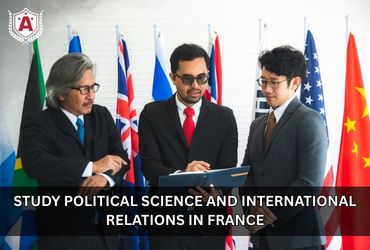 Do you want to learn more about politics and world affairs? France can give you the opportunity to study political science and international relations. France is widely recognised for its top universities that provide high quality and supportive education. This course mainly focuses on political systems, diplomacy and public policies using practical approaches. During the course, students can also study national and global affairs, social structures and policy making. The tuition cost at public universities is more affordable than in other countries. Several scholarships are also available to support your studies. However, living in France is safe and comfortable for students. It gives you opportunities to explore cities and meet new people from all around the world. If you are interested in studying political science and international relations in France, there is no need to worry. Anigdha is here to guide you clearly.
Before you plan to study political science and international relations in France, you need to understand the basic eligibility rules. These criteria are used by universities to see if you are suitable for the program.
Bachelor’s Eligibility Criteria
Application requirement: Students can apply online through Études en France or directly on the university portal while EU students usually apply through Parcoursup. It is important to fill all the details carefully to avoid any mistakes.
Educational background: Students need to complete high school before applying. This field is a good option for students with a background in history, economics or social studies.
Global admission test: There is no entrance examination for this course. Admission is given directly to students who meet the basic academic criteria.
Other requirements: Apart from basic requirements, students need to submit a motivation letter explaining their interest in the subject. You may also need to provide transcripts showing your academic results.
Language requirement: If the program is taught in English, students need to clear language proficiency tests such as IELTS, TOEFL or Duolingo. This is mandatory for English taught programs. Some accepted scores are mentioned below:
IELTS: 6.0 to 6.5 overall
TOEFL iBT: 80 to 90
Duolingo: Around 100
Master’s Eligibility Criteria
Educational background: Students need a bachelor’s degree in political science, international relations or a related subject to apply for master’s programs. This level focuses on deeper study of the subject.
Application requirements: Students can submit their applications online through MonMaster or the university portal. The application usually includes degree certificates and academic transcripts to show previous studies.
Other requirements: Students can write a motivation letter explaining their interest and goals in political science. Some universities may also ask for one or two recommendation letters.
Language requirement: If the master’s program is in English, students need to provide IELTS, TOEFL or Duolingo scores. Here are some accepted scores for English programs:
IELTS: Around 6.5 overall
TOEFL iBT: Around 90
Duolingo: Around 105
After this, the next step is to check the intake deadlines for political science and international relations in France. Universities offer two intakes during the year. September is called the main intake as universities usually start their full-time programs this month. They open maximum seats and offer the highest number of courses. If you miss this intake, some universities also offer a January intake. This can give you more time to prepare. Applications for the September intake usually start in November and close between March and May. This timeline can change depending on the university, so students should always check the deadlines carefully. However, applications for the January intake generally open around July and close by September. Apart from this, it is always better to apply early. This helps in securing admission smoothly and reduces last minute stress.
Before applying, students are required to complete all these essential documents carefully to ensure a smooth admission process for studying Political science and international relations in France.
Documents required for bachelor’s programs
Academic mark sheets of high school education.
A proof of school leaving certificate issued by the school.
Active passport with sufficient validity for education abroad.
A written letter showing why you chose to study this course.
Updated CV with all your academic background and basic personal information.
French language certificates like DELF, DALF or TCF.
English test scores such as IELTS, TOEFL or Duolingo.
Latest passport size photographs as per university guidelines.
Financial proof such as bank documents or statements to show sufficient balance.
Accommodation details if requested during the application process.
Letters of recommendation if asked by the university.
Proof of health coverage for international students.
Documents required for Master’s programs:
A bachelor’s degree certificate in political science or a related subject.
Passing Marksheet with overall grades and scores.
An active passport that remains valid during the study period.
A written motivation letter explaining why you want to study political science.
An updated CV with all your skills, education, internships and academic experience.
A short research proposal if asked by the university.
One or two recommendation letters to support your application.
French language certificate for French-taught programs.
Proof of English language proficiency if required.
Latest passport photographs in the correct format.
Accommodation details if requested by the university.
Any certificates from internships or relevant academic activities.
Proof of health coverage for the study period.
The bachelor’s degree in political science and international relations usually takes three years to complete. During this time, students can study topics like government systems, international affairs, political theories and current events. This helps them understand real world political and international issues clearly.
The master’s degree usually takes two years. The first year explores advanced topics in politics, international relations and research methods. The second year allows students to focus more on research, internships and projects related to political science and global affairs. This course can prepare students for higher studies, research or professional work.
Most bachelor programs in political science and international relations are taught in French. This helps students study the subject in a standard academic format across France. Apart from bachelor’s programs, some universities also offer English options for master’s programs, which can support international students. These options may vary from one university to another, so it is important to check the language of the program before applying. After choosing the language, students need to prepare for the required language proficiency test. If the program is taught in French, students must provide proof of French language ability through certificates such as DELF, DALF or TCF. If the program is taught in English, universities require proof of English language ability. Here are some common accepted scores:
IELTS: between 6.0 to 6.5
TOEFL iBT: between 80 to 90
Duolingo: Around 100 or 105
France has several universities that are well known for political science and international relations. These universities can provide a supportive learning environment for students. There are many universities but choosing the right one can be difficult. Here is a list of the top five universities that provide best quality education:
| Name of the University | Category | City |
|---|---|---|
| Sciences Po Paris | Public | Paris |
| Sorbonne University | Public | Paris |
| University Paris Cite | Public | Paris |
| Aix-Marseille University | Public | Marseille |
| Universite Grenoble Alpes | Public | Grenoble |
Studying political science and international relations in France is affordable compared to many other countries. The tuition fees depend on the type of university and the level of study. Below is a fee structure of top universities to help you get a clear idea before applying.
| Name of the University | Bachelor's fees per year | Masters's fees per year |
|---|---|---|
| Sciences Po Paris | The bachelor’s program costs around €4,000 per year. During the course, students can explore more about political systems, international policies and governance. It also includes research workshops and group projects. | The master’s program costs about €4,500 per year. Students can study advanced topics such as diplomacy, global relations and policy analysis through seminars and research assignments. |
| Sorbonne University | Bachelor tuition is around €3,500 per year. The course focuses on political theories, public administration and social policies. Students can also practice case studies and discussion sessions. | Master tuition is approximately €4,000 per year. The program focuses on international relations, political strategies and regional studies with practical research work included. |
| University Paris Cite | Bachelor fees are about €3,200 per year. During the course, students can study government structures, political debates and social institutions. They also attend workshops or simulations to understand decision-making processes. | Master programs cost around €3,800 per year. The course focuses on international diplomacy, comparative politics and policy research. It also includes field studies or guided projects. |
| Aix-Marseille University | Bachelor tuition is approximately €3,000 per year. The course explores politics, law and international affairs through lectures and group work. It also includes practical simulations or research exercises. | Master programs cost around €3,500 per year. Students can focus on international policies, governance challenges and strategy planning through seminars and applied research. |
| Universite Grenoble Alpes | Bachelor fees are around €3,200 per year. The course allows students to study political systems, international organizations, and policy frameworks. They can also take part in discussions and research projects. | Master tuition is about €3,800 per year. Students can study advanced topics in global politics, international law, and diplomacy. The program also includes practical projects and case studies. |
France offers several scholarships that can help with tuition and other study related costs. The Eiffel Excellence Scholarship is one of the popular options. It mainly supports master’s students and helps with tuition, travel and monthly living expenses. This allows students to focus more on research projects, internships or policy-related assignments without worrying too much about finances. Erasmus Plus is another option for students who are joining exchange programs or joint degrees. It supports short-term stays and collaborative projects between universities in France and other countries. Many French universities also offer their own scholarships, which can cover tuition fees and provide a small monthly allowance to selected students. Along with this, Charpak Scholarships are also available to supply Indian students. Lastly, it is always recommended to apply early, as it can increase your chances of receiving a scholarship.
These steps guide you clearly during the admission process so that you can move forward without any confusion at both bachelor’s and master’s levels.
Bachelor’s Admission Procedure
Start by shortlist universities that offer political science and international relations at the bachelor level. Make sure to check all eligibility criteria carefully, such as academic records and application requirements.
Create your application profile online through Etudes en France or the university portal, depending on your nationality and the university rules.
You need to fill in your personal and academic details properly. Make sure every detail is entered correctly to avoid delays.
Upload your high school mark sheets and school leaving certificate. These documents are used to confirm your high school completion.
A valid passport is required during the application process. It should cover your full study period in France.
Prepare a simple motivation letter explaining your interest in political science and international relations and why you chose France.
Submit language proof if your program is in French or English. This helps the university check your language ability.
After submitting the application, wait for the university approval. Keep a track on the website regularly.
Once you receive an offer letter, you can accept it within the given timeline to confirm your seat in the program.
After confirmation, start preparing your visa process and accommodation arrangements calmly.
Master’s Admission Procedure
Start by selecting a master’s program in political science and international relations that aligns with your previous studies. Check if you are applying for the first or second year.
Submit your application online through MonMaster or the university portal as per the university’s instructions.
Upload your bachelor’s degree certificate and academic transcripts to confirm your subject background.
Write a clear motivation letter explaining your interest in political science, international relations and your study goals.
Also update your CV with all your academic, personal and research details.
Some universities can also for a short research proposal. This allows you to explain the area of political science or international relations you wish to focus on.
Submit language proof as required by the program, in French or English.
One or two recommendation letters may be needed to support your academic profile.
After submitting all documents, you can track your application status online through the university portal.
Once you receive the admission offer, confirm your seat and plan your visa and stay in France smoothly.
Can international students study political science and international relations in France?
Yes, international students can study political science and international relations in France. Universities allow students from different countries and guide them clearly during the admission process. This can help you apply without any confusion.
What is the basic eligibility to study political science and international relations in France?
Students who want to join a bachelor program should complete their high school education while master students can apply after completing a bachelor’s degree in political science, international relations or any related field like social studies or economics.
What language are political science and international relations courses taught in France?
Many programs use French, especially at the bachelor level. However, some master programs are offered in English. You should always check the language of instruction on the university website before applying.
What documents are needed to apply for political science and international relations programs?
Universities usually require academic transcripts, motivation letters, CV or resume, language test scores, passport, recommendation letters and proof of funds. Some universities may also ask for research proposals or accommodation details.
How long is the course duration in France?
Bachelor programs generally take three years while master programs take two years. During this time, students can study political systems, international relations, public policy, global affairs and research methods.
Are there any scholarships available for international students in France?
Yes, scholarships are available to support tuition fees and living costs. Some popular options include Eiffel Excellence, Erasmus Plus and university-specific scholarships. Thus, applying early can improve your chances of receiving support.
Get free 1-on-1 counselling with our experts