Updated on Dec, 08 2025 04:06 IST
Study Farming in Poland





Test Preparations
About Us
Knowledge Hub

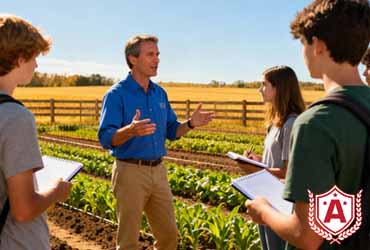 Are you interested in being part of a field that focuses on sustainable food production for the future? Studying Farming in Poland gives students the opportunity to learn modern farming methods with smart agricultural technologies. The program teaches soil science, crop cultivation, irrigation and sustainable farm management to increase productivity and ensure better food quality. It also helps students to explain modern machinery, precision agriculture, and agricultural economics under the ECTS system, giving them the option to continue their studies anywhere in Europe. Along with classroom learning, students can also spend time in the field to build the skills needed for real-world situations. Today, Poland has become a popular study destination because it offers affordable tuition, a secure environment and opportunities in agricultural innovation. The country's farming heritage and fertile soil provide students with hands-on learning and global experience. Therefore, studying farming in Poland allows students to gain worldwide skills, explore research, and begin careers in agribusiness, sustainability and food tech. If you want to grow your farming career in Poland, Anigdha will guide you through every part of your study abroad journey.
If you want to study Farming in Poland, you should first understand the admission requirements. We have listed the eligibility for both course levels below:
Eligibility Criteria for Bachelors:
Application requirement: Complete the online application form for English-language Farming or Agricultural Engineering programs, upload certified and translated diplomas and transcripts, submit proof of English proficiency (B2 minimum), provide ID and pay the application or enrollment fee.
Educational requirement: Applicants must have a recognized secondary school certificate with good scores in biology, chemistry, mathematics or related sciences, equivalent to the Polish Matura.
Global admission test: Many English-language farming programs accept high school or final exam grades and do not require a separate global test. Check the specific university details.
Additional requirement: Foreign documents often need legalization or apostille along with certified translations and sometimes a medical certificate or health insurance proof. Programs with small group enrollment may require minimum applicants.
English proficiency requirement: English proficiency is required for English-language farming programs and universities accept certificates or test results based on their policies.
IELTS: English Bachelor of farming programs require students to meet a minimum English score of 6.0.
TOEFL iBT: Students applying to English Bachelor of Farming programs must meet a minimum score of 8.0 or its equivalent.
Eligibility Criteria for Masters
Educational requirements: Students should hold a Bachelor’s degree in a relevant field such as farming, Agriculture, Agronomy, Environmental Science or Biology with good academic results. Those from other science backgrounds may be accepted if they have the needed basic knowledge.
Application requirement: Applicants need to submit a bachelor’s diploma and transcripts, a CV, a motivation letter and proof of English proficiency. Complete the online form for the program before the deadline and legalize or translate documents from abroad.
Additional requirement: Some master’s programs need research interest, recommendation letters and may have restricted admission. Applicants may need to attend an interview or complete other selection steps.
English proficiency requirement: Students applying to English-language Master’s programs in Farming or related fields must provide English proficiency proof. Applicants may submit a B2 certificate or equivalent English studies for admission.
IELTS: 6.5 often expected.
TOEFL iBT: 90 or equivalent.
Students may submit prior English instruction or a university-recognized certificate as proof of proficiency.
Farming in Poland has two main admission intakes each year. The Fall intake starts in October, with the application period running from late May through July. Spring intake classes start in February or March and universities often take applications between mid-November and mid-December. The program notes that October intake applications are due between early May and mid-July, and February intake applications are due between mid-November and mid-December. Applicants should check the official university website, as dates may differ between universities and programs.
The following documents are required to be submitted along with your application form for Farming in Poland:
Provide a valid passport or ID card for identification.
Provide a certified copy of your secondary education diploma or equivalent.
Submit your secondary education academic transcripts.
Provide translated copies of documents if they are not in the local language.
Accepted English test scores (IELTS, TOEFL, or equivalent).
Passport-sized digital photograph.
Standard-format CV with latest information.
Personal statement describing academic aims and future plans.
Endorsement Letters from faculty members supporting the application.
Fully filled student admission application form.
Application fee proof of payment.
Letter of acceptance from the university.
Visa paperwork for studies.
Bank certificate showing sufficient balance.
Insurance coverage for the duration of studies.
Here is the list of documents to submit when applying for a Master’s in Farming in Poland:
Front and back scanned copy of passport or government-issued ID.
Certified copy of Bachelor’s graduation certificate or temporary certificate.
Full academic record with semester-wise marks.
Translated versions of your academic and personal records, if originals are not in the official language.
Valid language proficiency certificate when necessary.
Updated passport-size photo in digital form.
Updated CV with education and work.
SOP outlining academic interests.
Letters of Recommendation from college teachers.
Official university application form.
Payment confirmation for application fee.
Offer letter issued by the university.
Study visa paperwork.
Evidence of fund availability.
Health protection documents
Farming courses are available in Poland in English as well as Polish language instruction. English-medium programs ask for proof of proficiency at around the B2 level on the CEFR scale. If your previous education was in English, you may submit an MOI certificate as a substitute for test scores. Also make sure to check the official university website for the exact requirements in advance.
IELTS: between 6.0 to 6.5
TOEFL iBT: between 80 to 90
Other accepted proof: B2-level English certificate or evidence of prior English instruction
The Farming bachelors degree taught in English takes 3.5 years to finish, including 7 semesters. The program covers lectures, laboratory work, optional subjects in livestock or plant production, agricultural economics and field practice.
Most Master’s degrees in Farming, Bioeconomy or Sustainable Agriculture take 2 years to complete, spread over 4 semesters. The program includes advanced subjects, a research thesis, sustainable farming topics and in some cases, joint study options.
It is crucial to check tuition fees of top Polish universities before starting a Farming course. Here’s a breakdown of common annual tuition fees for international students:
| Name of the University | Bachelor’s Fees/ Year | Master's Fees/ Year |
|---|---|---|
| University of Agriculture in Krakow | The annual fee is 406,800 INR, approximately 4,600 PLN. The program in Farming runs full-time and takes 3.5 years to finish for international students. | The tuition fee for master’s studies is usually similar to bachelor’s, approximately 4,600 PLN per year. Exact figures may vary depending on the specialization and academic year. |
| Warsaw University of Life Sciences (SGGW) | Bachelor-level tuition in Poland generally ranges from 7,600 PLN up to 18,990 PLN per year, depending on the university. This tuition scale applies to Farming and related disciplines for international students. | The cost of pursuing a master’s in Farming in Poland generally lies between 7,600 PLN and 21,840 PLN per year. The exact cost depends on the course design and criteria set for international applicants. |
| University of Life Sciences in Lublin | The yearly tuition cost for bachelor’s programs in Farming is generally between 8,500 PLN and 21,300 PLN. However, Farming programs may involve higher fees for international students. | At the postgraduate level, tuition is slightly higher, averaging between 9,000 PLN and 21,500 PLN per year. Applicants are advised to confirm the fee structure with the admissions office, as charges differ across specializations. |
| University of Warmia and Mazury in Olsztyn | The annual tuition for most bachelor’s degrees is approximately 12,000 PLN. The actual amount of tuition depends on the program specialization selected by the student. | The cost of pursuing a master’s program is slightly higher, with fees averaging 9,000 to 15,500 PLN annually. The exact tuition depends on which Farming specialization a student selects. |
| Wroclaw University of Environmental and Life Sciences | The average tuition for technology-related bachelor’s programs ranges from 10,000 PLN to 24,500 PLN per year. Students in farming programs can expect fees within this bracket, based on the program they choose. | The yearly cost of a Farming Master’s is usually between 12,000 PLN and 29,400 PLN. The exact cost depends on whether the student is international and on the chosen specialization. |
Note: The fees listed are approximate and may vary with the program, student category and university regulations. Therefore, Tuition fees do not include additional expenses such as rent, meals, or academic supplies.
Poland has top public universities offering Production Engineering, mainly in major cities with quality education at affordable tuition. Below is a quick look at some popular Farming options:
| Name of the University | Category | City |
|---|---|---|
| University of Agriculture in Krakow | Public | Krakow |
| Warsaw University of Life Sciences (SGGW) | Public | Warsaw |
| University of Life Sciences in Lublin | Public | Lublin |
| University of Warmia and Mazury in Olsztyn | Public | Olsztyn |
| Wroclaw University of Environmental and Life Sciences | Public | Wroclaw |
There are many scholarships designed to support international students in Agriculture studies. The Polish National Agency for Academic Exchange (NAWA) supports students with grants, including tuition waivers or partial funding, depending on their country and achievements. Students from partner institutions can often enjoy discounted tuition in joint or double-degree programs. Living expense scholarships and field-specific grants are occasionally available for these study areas. However, visit the official international office page of each university to stay informed about scholarships.
Let’s walk you through the admission process for both bachelor’s and master’s courses to study Farming in Poland with a simple step-by-step guide:
Bachelor’s Admission Procedure
The first step is to look into universities in Poland that provide Farming programs.
Take time to research and shortlist courses and universities that align with your profile and career goals.
The next step is to filter your list based on academic performance, admission requirements and tuition costs.
Once you decide on the university, complete the online application form and double-check the information entered.
Gather all necessary documents, including your legalized or apostilled secondary school certificate, transcripts, passport and English proficiency certificate.
In most cases, you must show English proficiency through IELTS or TOEFL, but a Medium of Instruction certificate can serve as an alternative.
Submit the application or admission fee as specified by the university.
If selected, you will receive an official offer letter confirming your admission. This is an essential document for your student visa application.
Proceed with your Polish student visa application, arrange HRD and apostille authentication of required documents and finalize your travel plan.
Ensure you have accommodation arranged near your university or within campus before the start of your studies.
Master’s Admission Procedure
Begin your admission journey by shortlisting Polish universities that offer a master’s in Production engineering.
Identify programs that best fit your academic profile, learning interests, and financial preferences.
Finalize suitable programs by ensuring you meet the entry criteria, typically a bachelor’s degree in Farming or a comparable subject.
Finish the application process by providing your bachelor’s diploma, mark sheets, CV, passport and English proficiency documents online.
Depending on the university, additional documents such as recommendation letters or an SOP could be mandatory.
Prepare for language tests, including IELTS or TOEFL, if your program requires proof of English skills.
In many cases, universities ask for the first semester tuition fee to finalize your admission.
The university will send you an official acceptance letter, which serves as a mandatory document for your visa application.
Begin the visa process, ensure your documents are legalized or apostilled and purchase an appropriate health insurance plan.
As soon as your visa is issued, make your travel arrangements and confirm accommodation for a smooth start.
What is the scope of studying farming in Poland?
Graduates in Farming can build careers in agricultural production, food technology, agribusiness, sustainable farming and rural development projects in Europe and Poland.
Are farming courses in Poland taught in English?
Yes, Many universities in Poland offer Agriculture, Agribusiness and Farming Technology programs in English for international students.
What qualifications are required to study farming in Poland?
Students must have a high school diploma to apply for Bachelor’s programs and a related undergraduate degree for Master’s programs.
What are the average tuition fees for farming courses in Poland?
The cost of tuition for international students is usually between €2,000 and €4,500 annually, depending on the program and university.
Are scholarships available for farming students in Poland?
Yes, scholarships like the Poland Government Scholarship, Erasmus+, and university-specific grants are available for international students.
Can international students work while studying in Poland?
Yes, part-time work up to 20 hours per week is permitted for international students during semesters with full-time work allowed during breaks.
Get free 1-on-1 counselling with our experts