Updated on Dec, 08 2025 03:23 IST
Study History in Poland





Test Preparations
About Us
Knowledge Hub

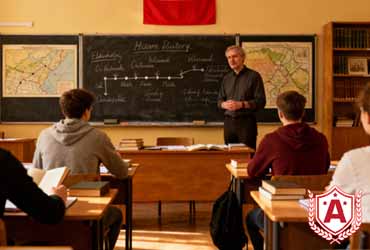 Do you ever wonder how events from the past shaped our present world? Studying history in Poland allows students to discover the stories, cultures and ideas that shaped human civilization. The course explores world history, European studies, archaeology and cultural heritage while strengthening the research and analytical skills. It also lets you explore records, museum visits and field projects to make learning more interactive. Poland is a rich city known for its history, cultural variety and monuments that allow students to experience the past. Universities here offer top-notch education, affordable tuition and a safe, welcoming space for all the international students. The ECTS system also allows students to continue their studies or internships in other European countries. If you’re eager to explore history and build your future, Anigdha will guide you through every stage of your study abroad journey.
Here is the detailed set of eligibility criteria that you must know before applying for History courses in Poland. Here we explain the requirements for both levels separately:
Bachelor’s Eligibility Criteria
Application requirement: Fill and submit the online admission form, upload your school diploma, mark sheets and translations if needed, attach your passport and pay the fee before the closing date.
Educational requirement: You must provide a school certificate that makes you eligible for higher education in your country. Strong results in history and humanities subjects will boost your application.
Global admission test: History bachelor courses typically don’t need global exams like the GRE. Some institutions could include a humanities assessment or interview, so it is important to check the official requirements.
Additional requirement: You might need to submit a motivation letter, a CV or a small collection of your previous history projects. This helps universities see your interest and potential in the subject.
English proficiency requirement: If you’re applying for an English-taught history course, you’ll need to show proof of English proficiency or that your previous education was in English. Common requirements are:
IELTS: between 6.0 to 6.5
TOEFL iBT: 72 to 90
Duolingo: 95 to 105
Master’s Eligibility Criteria
Educational requirement: Applicants are expected to hold a bachelor’s qualification in history, social sciences or cultural studies. Experience with research methods and analysis adds an advantage.
Application requirement: Apply through the master’s online portal by uploading your degree, transcripts, resume, motivation or research statement and passport copy. Make sure to pay the fee and review the program timeline.
Additional requirement: Many universities expect two recommendation letters, a research proposal or portfolio in history and sometimes an interview to evaluate research ability.
English proficiency requirement: English-taught history master’s degrees require verified English skills. Accepted proofs include IELTS, TOEFL and Duolingo results or prior studies completed in English. Standard minimum scores:
IELTS: 6.5 or higher
TOEFL iBT: 80 to 95
Duolingo: 100 and above
Students can apply to History programs in Poland during either the Fall or Spring intake. The Fall intake is considered the main session. Applications are usually open from May to July, and the academic year begins in September or October. A number of Polish universities provide a Spring intake as well, where the application period runs from October to January and courses start in February or March. Therefore, It is advised to prepare early so that all documents, admission, and visa work are completed on time.
Here is the list of documents you must attach to your application form when applying for Bachelor’s in History in Poland:
Clear photocopy of the passport including photo and personal details.
Application form submitted in the prescribed format with signature.
High school documents verified and translated into English or Polish, if applicable.
Passport-style photograph with clear visibility and neutral background.
Personal Statement showing passion for History and study objectives.
Official document verifying English skills meeting B2 or higher requirements.
Detailed resume covering education, achievements, and relevant skills.
Signed recommendation from school or college faculty members.
Statement of financial capability issued by bank or sponsor.
Proof of health insurance effective for the full course duration.
Admission acceptance document confirming student selection.
Additional credentials demanded by the respective academic institution.
Here is the list of documents required to be attached to your application form for a Master’s in History in Poland:
A clear copy of the passport’s identification page.
Degree certificate along with academic records, properly legalized.
Certified academic transcripts with a record of subjects and grades must be attached.
Recognition statement or qualifying certificate showing eligibility for postgraduate study.
Language test results confirming at least B2 proficiency in the chosen language.
Recent photo as per passport size requirements.
Filled and signed application form according to university rules.
Receipt showing payment of the application fee, if applicable.
Proof of medical insurance that covers your stay in Poland.
Poland provides numerous opportunities to study history in English, covering both bachelor’s and master’s degrees. The programs are offered in English, so overseas students can easily follow the lectures and take part in exams and discussions. Since some heritage topics use Polish resources, students with basic Polish find it easier to follow. Below are some minimum accepted test scores:
IELTS: 6.0 to 6.5 for bachelor and 6.5+ for master
TOEFL iBT: 72 to 95
Duolingo: 95 to 100 and above. Always check the specific programme.
A History bachelor’s in Poland generally covers six semesters over a three-year period. The course covers theoretical study, practical training and a closing thesis or research presentation.
The duration of a full-time History master’s degree is about 1.5 to 2 academic years. It offers advanced studies in chosen historical periods and ends with a research-based thesis project.
| Name of the university | Bachelors fees/ year | Masters fees/ year |
|---|---|---|
| University of Warsaw | The average tuition for international history degrees in Poland ranges from €2,000 to €4,000 per year. Always verify the latest rate with the admissions office. | Tuition for English-taught master’s history programmes is normally set around €2,500 to €5,000 each year. Always check the university’s official source for the latest amount. |
| Jagiellonian University | The yearly tuition for history or cultural heritage courses taught in English usually ranges from €2,000 to €4,500. Confirm current rates before applying. | The annual cost for international students in master’s history programmes is typically €2,500 to €5,000, depending on specialisation and workload |
| Adam Mickiewicz University | Most non-EU students pay about €2,000 to €3,500 a year for bachelor programmes in history. Confirm the amount on the university portal. | The yearly tuition for non-EU history or heritage master’s programmes generally falls between €2,500 and €4,500. Always confirm current fees. |
| University of Wroclaw | Tuition for international history degrees taught in English averages between €2,000 and €4,000 yearly. Verify official details on the university site. | Annual tuition for history or public history master’s programmes in English ranges €2,500 to €5,000. Check official sources for the latest update. |
| University of Lodz | The cost for non-EU students in history undergraduate programmes is usually €2,000 to €3,500 per academic year. Confirm before applying. | Annual tuition for history or public history master’s programmes in English ranges €2,500 to €5,000. Check official sources for the latest update. |
Note: Tuition fees vary by university, study level and student origin (EU vs non-EU). Always check official university websites for the most current and exact fee details.
Here are some of the top Polish universities where you can pursue your desired bachelor’s or master’s course of History in Poland.
| Name of the university | Category | City |
|---|---|---|
| University of Warsaw | Public | Warsaw |
| Jagiellonian University | Public | Krakow |
| Adam Mickiewicz University | Public | Poznan |
| University of Wroclaw | Public | Wroclaw |
| University of Lodz | Public | Lodz |
Poland offers various funding options for students who want to study history or humanities. The Polish National Agency for Academic Exchange manages scholarships for full-time studies and research stays in Europe. Many Polish universities grant tuition reductions or scholarships to strong candidates in history or cultural programs. The Erasmus+ scheme allows students to take part in exchange semesters across Europe and explore different historical contexts. Some regional cultural institutions and government bodies also give grants to students in heritage or preservation studies. Since education in Poland is more affordable, scholarships make it an even more cost-effective option for international students. Applicants are advised to review scholarship information carefully, track dates and show clear motivation in their applications. However, early preparation makes it easier to qualify for scholarships and ensures a successful study experience abroad.
Here is a simple admission process you should follow to secure your seat in Poland for both levels of study:
Bachelors Admission Procedure
Go to the university’s official site, explore history programmes in English and review admission dates and requirements.
Create your account on the admissions portal and fill in all details correctly.
Submit all educational documents clearly scanned, along with verified translations if applicable.
Submit a scanned passport, a current photo and pay the fee directly through the university portal.
Add your English proficiency proof to the portal, such as IELTS, TOEFL or a prior study certificate.
If needed, attach your CV, motivation letter or other requested materials.
After receiving the offer, confirm it on the portal and proceed with enrolment guidelines.
Get your student visa, book a place to stay and complete registration at the university after reaching Poland.
Master’s Admission Procedure
Visit the university website to see English history master tracks, requirements and intake timelines.
Open your account on the admissions portal and complete each section of the application clearly.
Attach your bachelor certificate and academic records, including certified translations if not in English.
Upload all supporting materials, including your CV and project idea, before paying the application charge.
Attach your English test scorecard or equivalent certificate as proof of language proficiency.
If requested, share two letters of recommendation and join the interview or evaluation.
Once admitted, accept your seat, complete the deposit payment and ask for the confirmation letter.
Get your visa, confirm housing and bring all original papers for verification at the university.
Is it possible to study history in Poland entirely in English?
Yes, Poland has several English-medium history programmes, letting international students study comfortably without needing Polish at first.
How much IELTS or TOEFL score do I need for a history programme in Poland?
Most bachelor’s tracks ask for IELTS 6.0 to 6.5, while master’s require 6.5+. Check exact requirements on the programme webpage.
What is the course duration for studying history at the bachelor’s level?
The bachelor’s in history is a three-year course with academic lectures, discussions and a research component.
Are scholarships available for history programmes in Poland?
International history students can apply for NAWA funding, Erasmus+ mobility and various university scholarships.
Can I use my Polish history qualification to work or study elsewhere in Europe?
Yes, Poland’s ECTS-based education system guarantees that your qualification is accepted in many European countries.
Is it possible to work during my studies as a history student in Poland?
Yes, many history students in Poland work part-time under visa allowances and take up local internships.
Get free 1-on-1 counselling with our experts