Updated on Dec, 08 2025 03:20 IST
Study Journalism in Poland





Test Preparations
About Us
Knowledge Hub

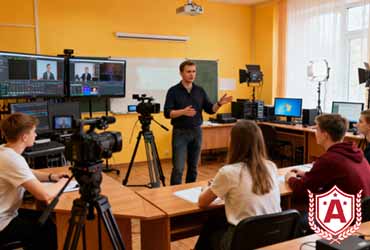 Have you ever wanted to share stories that open minds, inspire action and create positive change? If so, Journalism in Poland offers the perfect space to begin this journey, as it allows students to understand how information influences society. Through this field, students will discover how reporters prepare news, confirm details and distribute it across modern platforms, ensuring they learn the value of accuracy and responsibility. The courses also help develop skills in research, interviewing, editing and storytelling, making the learning experience both practical and engaging. The ECTS credit system allows students to study or work in other European countries without difficulty, creating more opportunities for growth and global exposure. Today, Poland is growing in popularity among journalism students due to its low costs, international reputation and safe living conditions, making it an appealing destination for aspiring media professionals worldwide. Therefore, studying Journalism in Poland prepares you for a career in media, broadcasting, public relations and communication, opening wide pathways for your future. If you want a trusted path, Anigdha can offer support that could lead you step by step to success in studies and careers within Journalism, ensuring you are guided throughout your academic journey.
Before applying for Journalism in Poland, it is important to understand the eligibility rule. This criteria can vary slightly depending on the university but these are the standard requirements for undergraduate and postgraduate study.
Bachelor Eligibility Criteria
Application requirement: You are required to apply through the official international admissions portal by uploading all academic documents, certified school-leaving diplomas and a scanned passport page, followed by payment of the stated application fee.
Educational requirement: Students need a valid high-school qualification from their country, preferably with solid performance in subjects like literature, civics or social studies that support academic readiness for journalism studies.
Global admission test: Universities often ask for a journalism essay, sample article or small writing portfolio to help review your communication skills, argumentation and overall writing quality.
Additional requirement: Some universities conduct interviews or online tests to evaluate whether applicants can analyse information, support claims with evidence and handle deadlines typical of journalism work.
English proficiency requirement: Since instruction is in English, universities can require a recognized proof of proficiency. This can be done with a recognized test score or records showing earlier English instruction. Here are some accepted scores:
IELTS: 6.0 to 6.5
TOEFL iBT: 72 to 90
Duolingo: 95 to 110.
Master’s Eligibility Criteria
Educational requirement: Applicants should already possess a bachelor’s degree in Journalism, Media Studies, Political Science or a closely related field with relevant coursework in communication.
Application requirement: You must submit your bachelor diploma, full transcripts, a CV, a motivation or research statement and pay the application fee when applying for a master’s in media or journalism.
Additional requirement: Applicants are required to submit two recommendation letters from academic or professional referees, particularly for research-oriented master’s programs, as these help evaluate their potential for advanced media work or scholarly investigation.
English proficiency requirement: Master’s courses use English as the medium of instruction, so candidates must have an advanced command of the language. Here are some accepted scores:
IELTS 6.5 or higher
TOEFL iBT: 80 to 95
Duolingo: 100 and above
The fall admission period for Journalism in Poland is generally June to mid-July, before the October semester begins. The application window at University of Warsaw runs from June to mid-July with exams and final admission decisions taking place toward the end of July. Both diverse programs and scholarship opportunities are open in this intake. In some cases, universities open admissions for spring, starting February or March, with applications in autumn. However, it's better to apply early because document checks and visas may take longer.
The following documents are required to be submitted along with your application form for Journalism in Poland:
Submit a valid passport or government-issued ID.
Provide a verified higher-secondary certificate or equivalent.
Attach full academic transcripts from secondary education.
Include certified translations for documents not in English or Polish.
Provide English proficiency test results when required.
Upload a digital, recent passport photograph.
Attach an updated resume or CV.
Add a personal statement describing your study intentions.
Provide two academic or professional reference letters.
Ensure the application form is fully and correctly filled.
Upload proof of the application fee payment.
Provide the official acceptance letter from the university.
Submit visa documentation as required.
Provide financial proof showing sufficient funds.
Arrange valid health or travel insurance.
Here is the list of required documents for Master’s in Journalism in Poland:
Scanned passport copy (front & back) or valid national ID card.
Bachelor’s degree certificate or provisional pass certificate.
Complete academic transcript set for all semesters.
Certified translations for non-English documents.
English test score report if required by the programme.
A recent digital passport-style photo.
Updated resume summarizing studies and experience.
SOP describing academic aims and future plans.
Academic recommendation letters from lecturers.
Completed admission application form of the university.
Proof showing the application fee has been paid.
Official acceptance notice from the university.
Visa-related documents for study purposes.
Evidence of financial support or bank proof.
Health insurance or medical coverage documents.
Many journalism programmes in Polish universities are offered entirely in English, appealing to students who want to study in Poland without knowing Polish. These programmes cover journalistic writing, media law, digital reporting, multimedia production and ethics. Students will get to work in studios, newsrooms and simulation labs and all assessments happen in English. However, some universities may recognize prior learning in English instead of requiring language tests. Here are some commonly accepted English proficiency scores:
IELTS: 6.0 to 6.5 for bachelor while
6.5 and above for masters
TOEFL iBT: Between 72 to 95
Duolingo: 95 to 110
The undergraduate Journalism or Media Studies programme spans three years, giving students six semesters to learn key media principles and develop reporting skills through practical and simulated experiences.
The Master’s course in Journalism or Social Communication is typically spread across 1.5 to 2 years, including three or four semesters of advanced media instruction, research work, digital production and a final thesis or professional assignment.
| NAME OF THE UNIVERSITY | BACHELORS FEES/YEAR | MASTERS FEES/YEAR |
|---|---|---|
| University of Warsaw | The annual tuition for the English-taught BA in Journalism generally ranges from €2,500 to €3,000, depending on the admission cycle | The annual tuition for non-EU applicants in English-taught Social Communication or Media Studies master’s programmes ranges from €2,000 to €6,000. |
| Jagiellonian University | The cost for non-EU students pursuing a Bachelor’s in Media or Journalism usually ranges from €2,800 to €3,500 each year | The yearly cost for non-EU students in Master’s-level Journalism or Media programmes is usually between €2,500 and €5,000. |
| University of Wroclaw | The annual tuition for international students in the English-taught BA Media and Communication programme is about €2,000 to €3,000. | The MA in Journalism and Social Communication costs international applicants about PLN 3,650 each semester, which totals around €800 to €900 annually. |
| Adam Mickiewicz University | The yearly cost for non-EU students in BA Economics or Communication generally falls between €1,800 and €2,500. | The tuition for these English-medium Master’s programmes is not fixed, so applicants should check the programme page for exact costs |
| VIZJA University | The yearly fee for international students in Journalism or Political Science is listed online, so applicants are advised to check the official site. | The programme charges international students annually and the latest tuition cost is listed on the official admissions page. |
Many leading Polish universities provide Journalism courses at both bachelor’s and master’s levels:
| NAME OF THE UNIVERSITY | CATEGORY | CITY |
|---|---|---|
| University of Warsaw | Public | Warsaw |
| Jagiellonian University | Public | Krakow |
| University of Wroclaw | Public | Wroclaw |
| Adam Mickiewicz University | Public | Poznan |
| VIZJA University | Private | Warsaw |
Poland supports international journalism students with a number of scholarship opportunities that make it easier to study in Europe. The Polish National Agency for Academic Exchange (NAWA) offers merit-based grants, mobility scholarships and awards covering tuition or living costs. Many universities, including VIZJA, public and private institutions, provide scholarships based on grades, portfolios or journalistic talents. Erasmus+ and bilateral scholarship programmes also support exchange or full-degree study in media fields. As a result, students who build a strong application and show genuine interest in media storytelling are more likely to be noticed and obtain financial support to study abroad in Poland.
If you are planning to build your career in Journalism, Anighda overseas education is here to make this process simple and easy. Let's see how:
Bachelor Admission Procedure
Create an account on the university’s global admissions page and fill in your basic information such as name, email, address and past education.
Choose the Journalism or Media course from the list and make sure you are applying for the English-language track.
Attach digital versions of your diploma, transcript sheets, a clear photo and your passport bio page to the application.
Add your English proficiency certificate or attach records of past English-based schooling.
Submit a writing sample or short portfolio along with a motivation letter explaining why you want to study Journalism in Poland.
Join the scheduled interview or written exam if your course has an additional selection stage.
After acceptance, follow the instructions to complete registration and pay any required enrollment deposit if accepted.
If you're from outside the EU, complete your visa application, secure housing and prepare your travel documents.
Master Admission Procedure
Sign up on the graduate admissions website and complete the required fields with your correct personal and educational information.
Choose the MA in Journalism, Communication or Social Media that best aligns with your interests and future career path.
Submit digital copies of your Bachelor’s degree, complete transcript record, passport ID, CV and a detailed motivation statement.
Send in two recommendations from people who can vouch for your potential in media, communication or academic research
Provide a recognised English test score like IELTS or TOEFL according to the university’s admission requirement.
Complete the interview or assigned media task if the programme uses these methods to test applicants.
When you get the acceptance, follow the instructions to pay the deposit and complete your programme enrolment.
If you come from outside the EU, ensure you apply for a visa, get insurance, arrange a place to stay and plan your trip.
Do English-taught Journalism programmes require Polish language?
No. Many programmes let you study in Poland in English but however speaking Polish helps when doing local internships or reporting.
What are the admission requirements for a bachelor’s in Journalism?
Students may need high school certificates, a completed application, passport, English language proof and in some cases an interview or motivation letter to apply for bachelor’s programmes.
Are Polish Journalism degrees internationally recognized?
Degrees are often recognized under the European Higher Education Area, so students can continue studies or start professional careers in Europe and beyond.
Are there scholarships for Journalism students from abroad?
Yes. Universities and NAWA run grants for media and communication students. Eligible students can also apply for program-specific or merit scholarships.
Can international students work while studying in Poland?
Yes, International students in Poland can work part-time alongside studies and full-time during holidays, earning income and professional experience.
What are the career opportunities after studying Journalism in Poland?
Students finishing this course can work as broadcast media, digital news, public relations, content strategy or communication for NGOs and global organizations.
Get free 1-on-1 counselling with our experts