Updated on Dec, 08 2025 03:18 IST
Study Mining Engineering in Poland





Test Preparations
About Us
Knowledge Hub

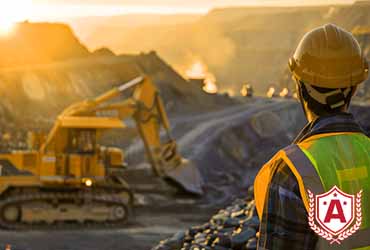 Do you want to explore a course that teaches about minerals, modern mining methods and advanced safety? Mining Engineering in Poland focuses on mining methods, blasting techniques, ventilation, geomechanics and mine planning. The program highlights economics, sustainable mining and management. Students studying in Poland will be able to strengthen their practical learning with lab work, site visits and mining simulation software. The program is designed to build technical knowledge and real-world skills in students, allowing them to work in coal mines, metal ore sectors, salt extraction plants and underground construction works. A mining engineering bachelor’s program in Poland generally takes 3.5 to 4 years and grants ECTS credits useful for pursuing postgraduate study or global career paths. Today, Poland stands out as a study hub due to its budget-friendly education, research focus and student-friendly culture. Choosing Mining Engineering in Poland means getting excellent education, cultural interaction and future career success. If you are looking for the right guidance, Anigdha is here to help you at every step. We make your study abroad journey easy and stress-free!
If you aim to pursue Mining Engineering in Poland, you need to check the eligibility rules first. We have divided the requirements for both bachelor’s and master’s levels to make it easy for you to understand.
Bachelor’s Eligibility Criteria
Application requirements: Every applicant must prepare a completed online form, an apostilled or legalized school diploma with transcripts, and certified translations into English or Polish if necessary. The application must include a scanned passport and a current passport-size photograph.
Educational requirements: Applicants need to show evidence of finishing secondary education that allows higher studies in their country.A strong base in math and physics is also important.
Global admission test: In some cases, universities will organize an interview or entrance exam to review academic knowledge. The official course page should always be referred to for accurate requirements.
Additional requirements: A health certificate and proof of health insurance may be required for admission. Applicants should also include passport-size photos along with the required consent form.
English proficiency requirements: The following scores are widely recognized for admission into English programs:
IELTS: 6.5 or higher
TOEFL iBT: 87 or higher
Duolingo: 95 to 100 points
Master’s Eligibility Criteria
Educational requirements: Candidates must possess an undergraduate degree in Mining Engineering, Geology or related specializations like Geodesy and Cartography. Applications are evaluated according to personal qualifications.
Application requirements: The documents you need are a legalized Bachelor’s diploma, academic transcripts, official translations if required, your passport copy and one recent photo.
Additional requirements: Applicants might have to attach a CV, statement of purpose, or recommendation letters, depending on university requirements.
English proficiency requirements:
A minimum of B2 level English proficiency is required. The accepted test scores are:
IELTS: 6.5 or higher
TOEFL iBT: 87 or higher
Duolingo English Test: 105 to 110 points
Mining Engineering courses in Poland are available in both English and Polish for international and local students. Polish is the primary language but most overseas students go for English programs because they feel more comfortable studying engineering. The standard language requirement set by universities is a B2 level under CEFR. If your past studies were in English, you may submit either test scores or an MOI certificate. Since requirements can change by institution, always read the program page and get ready for exams, paperwork and translations.
Accepted tests include:
IELTS: minimum 6.5 (Academic)
TOEFL iBT: minimum 87
Duolingo: 95 to 100 for Bachelor’s and 105 for Master’s programs
Here is the list of documents to be applied for while applying for a Bachelor's in Mining engineering in Poland:
A duly filled university application form submitted online.
Clear photocopy/scan of the valid passport (ID section).
Latest passport-size photograph(s) as per university guidelines.
Authentic copy of the secondary school qualification.
Official transcripts displaying all semester results.
Official English/Polish versions of your academic documents if not originally issued in these languages.
Legalization or Apostille of your high school diploma if mandated by admission rules.
Valid English proficiency test results for English-medium programs (refer to score requirements below).
University-requested medical fitness certificate for study purposes.
Health or visa-stage insurance documentation as per official requirements.
Bank statements or sponsor guarantee letters demonstrating sufficient financial resources.
Extra application materials like entrance exam results, creative portfolio, or academic recommendation, if specified.
Here is the list of documents required to be attached to your application form for a Master’s in Mining engineering:
Filled and submitted a university application form specific to your selected Master’s program.
Clear scanned copy of passport (main ID page) plus latest photographs as per guidelines.
Official Bachelor’s degree certificate or provisional certificate from the awarding university.
Full academic transcript showing detailed results of Bachelor’s degree studies.
Official translation of all academic documents into English or Polish by a sworn translator.
Verified apostille/legalization of transcripts and degree as per institutional requirement.
Documented proof of English proficiency for admission to English-medium programs.
Updated CV detailing educational background, professional experience, and internships.
Written statement of purpose reflecting study goals and professional aspirations.
Formal recommendation letters addressing your academic and/or professional strengths.
Study plan describing academic interests, research direction and objectives.
Financial documentation showing sufficient funds for tuition and living expenses.
Mining Engineering programs in Poland commonly start in October, and students can apply during the admission window from May to July. While October is the main intake, some programs also begin in February, with application processing from November to January. Each university may set its own deadline, with variations for international and EU candidates, so applicants should verify dates directly with the institution. Therefore, early submission helps you manage paperwork like legalization, translations and visa processing smoothly.
The bachelor program structure for Mining Engineering in Poland includes 3.5 years of full-time study, divided into seven semesters, with 210 ECTS credits. The curriculum emphasizes practice in geo mechanics, ore treatment and computer-based design of mining processes.
The Master’s course for Mining Engineering in Poland has a duration of 1.5 years and provides 90 ECTS credits after three semesters. The program emphasizes geological modelling, methods of risk mitigation, project coordination and automation technologies.
Tuition fees for Mining Engineering in Poland differ across universities and study levels. These requirements shift based on whether you are applying for a Bachelor’s or Master’s program and the institution’s policies.
| Name of The University | Bachelor's Fees/Year | Masters Fees/Year |
|---|---|---|
| Warsaw University of Technology | International students usually pay between €7,000 and €8,000 per year for a Bachelor’s program. | The tuition fee for a Master’s in Poland is typically €3,000–€4,000 annually. |
| University of Warsaw | Tuition fees generally fall between €2,000 and €4,000 per year for international students, depending on the degree. | Students generally pay €3,000 to €5,000 per year for a master’s program, while some specialised options have higher fees. |
| Gdansk University of Technology | Tuition fees for international students in Poland range between 3,000 to 37,000 PLN per year (around €750 to €9,500), depending on the course | The tuition fee for a Master’s degree ranges between 11,850 and 17,000 PLN yearly (approx. €2,500 to €3,700) |
| Warsaw University of Life Sciences (Sggw) | Tuition ranges from €1,300 to €2,650 per semester, depending on your chosen engineering field. | Tuition spans €1,800 to €3,500 per semester, based on the specific program. |
| University of Wroclaw | Fees usually range between €2,300 €3,000 per year, depending on the program chosen. Some courses, like Biotechnology, can cost about €3,000 annually. | Fees fall roughly between €1,950 and €3,000 per year. The exact cost varies by subject; for example, Astrophysics is around €1,950, while Medical Biotechnology is closer to €3,000. |
Please note: These fees are not fixed and may vary with the program selected, income status or university guidelines.
Here are some of the most popular universities in Poland where students can enroll in Bachelor’s and Master’s Engineering courses.
| Name of University | Category | City |
|---|---|---|
| Warsaw University of Technology | Public | Warsaw |
| University of Warsaw | Public | Warsaw |
| Warsaw University of Life Sciences (Sggw) | Public | Warsaw |
| Gdansk University of Technology | Public | Gdansk |
| University of Wroclaw | Public | Wroclaw |
If you are planning to pursue your Bachelor’s in Poland, Anighda overseas education is here to make this process simple and easy. Let's see how:
The first step is to choose the course in your area of study such as Mining engineering in Poland.
Check the eligibility rules for your chosen university. In most cases, Universities in Poland usually accept students who have completed 10+2 or equivalent education in related subjects.
Gather all required academic documents like transcripts, certificates and a valid ID proof before applying.
Fill out the university’s online application form and upload all required documents.
Wait while the admission team reviews your application. If selected, you’ll receive an offer letter within 15 days.
Once accepted, pay the first tuition installment as requested by the university to secure your admission.
Submit the offer letter, proof of finances, and required documents to apply for a student visa.
Book your travel and get set for your move to Poland.
Every step can be managed easily under Anigdha’s guidance, so you may begin your studies in Poland.
Master’s Admission Process: If you want to continue your studies with a Master’s degree in Poland, here’s what to do:
Start by choosing your specialisation, such as Mining engineering in Poland.
Check the eligibility criteria. Most Polish universities ask for a completed Bachelor’s degree in a related field.
Collect all mark sheets, certificates and identification documents.
Complete the form for your chosen course and attach all necessary documents.
Once accepted, the university provides an official letter of admission.
Complete the first tuition payment as directed by the university.
Submit your admission letter, financial support documents, and health insurance for a student visa.
Finalise your travel plans and step into your Master’s studies in Poland.
Therefore, the entire admission journey may become smoother with support from Anigdha Overseas Education.
Many Polish institutions and government programs support Mining Engineering students with scholarships to cut down tuition fees. These scholarships can come from government schemes, university funds or international programs, including Visegrad and CEEPUS. The NAWA Banach Scholarship offers Master’s students PLN 1,800 per month, covers tuition and travel and allows study in both English and Polish. This scheme covers full tuition and gives a monthly scholarship to qualified students from selected developed countries. However, if students prepare well, they can benefit from strong financial support during their studies in Poland.
Are Poland degrees recognized across Europe and accredited?
Yess, AGH University holds ABET accreditation for Mechatronic Engineering, while many of its programs comply with ENAEE and ECTS standards for international recognition.
What are the common career paths in the field of Robotics Engineering?
Career options after robotic engineering include embedded systems, industrial and medical robotics, AI-based automation, manufacturing and control design.
Are Polish language skills mandatory for studying engineering in Poland?
Not necessarily. Most universities offer English-taught programs but knowing Polish can help you in social interactions and local job placements.
How is the duration of an Mining engineering course in Poland?
Bachelor's studies in Poland often take three years while master's studies may require one and a half to two years, though it depends on university rules and the field of study.
How long does the Poland admission take?
The admission timeline in Poland is usually two to three months. This can change depending on the university schedule, student preparation and additional steps like visa or certification.
Can international students work part-time in Poland during their studies?
Getting part-time work in Poland is possible, but it depends on the student's skills and location. Students often work in retail, hospitality or language tutoring while managing study schedules.
Get free 1-on-1 counselling with our experts