Updated on Dec, 08 2025 03:00 IST
Study Psychology in Poland





Test Preparations
About Us
Knowledge Hub

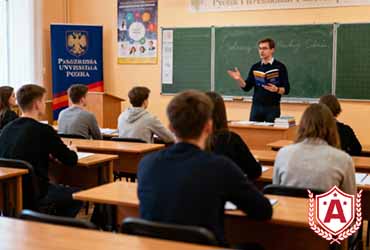 Have you ever been curious about why people feel emotions or behave differently? Studying Psychology in Poland helps students explore the science of the human mind and behavior. This field teaches how emotions, thoughts and social factors influence decision-making and relationships. Students will get to learn about various fields, including clinical psychology, child development, mental health and research methods. The programs focus on both theory and practice, allowing them to gain real experience through workshops, labs and internships. Universities in Poland are known for providing a supportive environment with modern facilities and qualified professors. The ECTS credit system also allows students to study in other European countries and build international exposure. However, choosing Poland means gaining a quality education without overspending. As a result, studying Psychology in Poland opens doors to careers in counseling, healthcare, education and research. If you plan to pursue Psychology abroad, Anigdha is here to support you in every step of your journey.
Here is the detailed set of eligibility criteria that you must know before applying for Psychology courses in Poland. We have made it simple by dividing the eligibility into bachelor’s and master’s stages.
Bachelors Eligibility Criteria
Application requirement: Submit an online application, upload your high school diploma and transcripts with translations if needed, attach a passport copy and photo and pay the application fee.
Educational requirement: Be ready with your school leaving certificate or equivalent that grants access to higher education in your country. However, good grades in humanities or sciences enhance your profile.
Global admission test: Most bachelor Psychology programmes in Poland do not require tests like GRE. However some may ask for interviews or assessments in English or Psychology basics.
Additional requirement: Some programmes request a motivation letter or CV showing interest in psychology, research or human behaviour to strengthen your application.
English proficiency requirement: If you apply for an English-taught Psychology degree, you need to provide an English test score or evidence of English-medium schooling. Here are some common minimum scores:
IELTS: 6.0 to 6.5
TOEFL iBT: Between 72 to 90
Duolingo: 95 to 105
Master’s Eligibility Criteria
Educational requirement: Students must hold a bachelor’s degree in Psychology or a related subject and show they have completed courses in research methodology or key psychological theories.
Application requirement: Complete the online application for the master’s programme, upload your bachelor’s diploma and full academic transcripts, provide a CV and motivation letter and pay any application fee.
Additional requirement: Many master’s programmes expect two reference letters, a short research proposal or portfolio and sometimes an interview or assessment to test analytical readiness.
English proficiency requirement: If you are applying to an English-taught Psychology master's, you must meet specific English standards. Here are some minimum accepted scores:
IELTS: 6.5 and above
TOEFL iBT: 80 to 95
Duolingo: 100 and above
Studying Psychology in Poland has two main admission intakes each year. The Fall intake starts in October with the application period running from late May through July. Spring intake classes start in February or March and universities often take applications between mid-November and mid-December. The program notes that October intake applications are due between early May and mid-July, and February intake applications are due between mid-November and mid-December. Applicants should check the official university website, as dates may differ between universities and programs.
Here is the list of documents you must attach to your application form when applying for Bachelor’s in Psychology in Poland:
Submit a signed application form with all required information accurately entered.
A digital image of your passport-size photo with a plain background.
Official transcripts or certificates from high school showing completed education.
Applicants must have a combined score of 60% in Mathematics.
Translated copies in English or Polish are required if originals cannot be provided.
English proficiency proof can be given by IELTS, TOEFL, or an equivalent exam.
Academic potential proof in the form of a teacher’s recommendation letter.
A valid passport copy must be submitted for university admission and visa.
Resume listing academic success and extracurricular involvement.
Official letter confirming admission from a Polish university.
Financial proof for education and living expenses.
Certificate of health insurance covering your study period.
Provide all documents along with the visa application.
Here is the list of documents required to be attached to your application form for a Master’s in Psychology in Poland:
Submit the completed application form with correct information and signature.
Attach proof of completed undergraduate studies, such as transcripts or degree certificates.
At least 65% overall score or matching CGPA is needed.
High school certificates should be submitted if required by the chosen university.
Submit translated copies in English or Polish when originals are in another language.
Academic references or recommendation letters provided by university professors.
Comprehensive CV presenting educational background, professional skills and achievements.
Copy of valid passport needed for both university admission and visa application.
Admission confirmed through acceptance letter from the Polish university.
Evidence of sufficient funds for education and daily living.
Certificate of medical insurance valid throughout studies in Poland.
Fill your visa application form with mandatory documents attached.
Many Polish universities offer Psychology programmes fully taught in English for international students, covering both bachelor’s and master’s levels. These courses include lectures, seminars and assessments in English. However, the basic Polish language is helpful for everyday life but not required. Here are some commonly accepted English proficiency scores:
IELTS: 6.0 to 6.5
TOEFL iBT: 72 to 95
Duolingo: 95 to 100
The Bachelor of Psychology in Poland normally runs for three years with courses spread evenly across six semesters. The course helps students master core areas like psychological theory, research methodology, applied skills and a bachelor project or internship.
The Master’s in Psychology programme generally runs for two years, divided into four structured semesters. It emphasizes on advanced topics such as clinical, cognitive or organisational psychology, includes a research thesis and often a practical placement or internship.
Here are separate tuition-fee details for five Polish universities, listed separately for Bachelor’s and Master’s programmes:
| Name of the university | Bachelors fees/ year | Masters fees/ year |
|---|---|---|
| SWPS University of Social Sciences and Humanities | Most Bachelor’s programmes for international students in Poland fall within €2,000 to €5,000 annually, making it a practical and affordable destination to study in Europe. | Master’s studies priced between €3,000 and €6,000 annually let students study in Poland affordably and gain European-standard academic recognition. |
| University of Warsaw | Public universities in Poland typically charge €2,000 to €4,000 per year, making it easier for global learners to study in Europe without high financial pressure. | Many Polish master’s programmes cost around €3,000 to €4,000 annually, positioning Poland as a practical gateway to study in Europe. |
| University of Wroclaw | Average undergraduate tuition of €2,000 to €4,000 per academic year makes it easier to study in Poland without financial strain while joining the European higher education framework. | On average, master’s tuition ranges between €2,500 and €4,000 annually, making it affordable to study in Poland while building a global career foundation. |
| Jagiellonian University | Annual tuition for undergraduate degrees averages €2,000 to €5,000, allowing students to study abroad in Poland with affordable access to European-quality education. | On average, master’s tuition ranges between €2,500 and €4,000 annually, making it affordable to study in Poland while building a global career foundation. |
| Adam Mickiewicz University in Poznan | At institutions with strong quantitative focus, bachelor’s tuition averages €2,000 to €4,000, making it easy to Study abroad in Poland at a manageable cost. | Tuition for data-driven postgraduate courses averages €3,000 to €5,000 annually, giving students an opportunity to study in Europe while keeping costs under control. |
Note: Tuition fees vary by university, study level and student origin (EU vs non-EU). Always check official university websites for the most current and exact fee details.
Here are some of the top Polish universities where you can pursue your desired bachelor’s or master’s course of Psychology in Poland.
| Name of the university | Category | City |
|---|---|---|
| SWPS University of Social Sciences and Humanities | Private | Warsaw |
| University of Warsaw | Public | Warsaw |
| University of Wroclaw | Public | Wroclaw |
| Jagiellonian University | Public | Krakow |
| Adam Mickiewicz University in Poznan | Public | Poznan |
International students who decide to study in Poland in Psychology can access a variety of scholarship opportunities. The Polish National Agency for Academic Exchange (NAWA) offers full-degree scholarships, mobility grants and research-based funding for international students in Psychology and social sciences. Universities such as SWPS have merit-based tuition waiver programmes for new entrants with strong academic records. Some regional and European programmes like Erasmus+ also support exchange periods and joint-degree options in psychology. Since psychology is becoming an important global field, universities in Poland are now providing more support for students focused on mental health and behavioural science. As a result, the number of foreign students has surpassed 100,000, showing how studying in Poland has become one of the most attractive and affordable options to study abroad in Europe.
Bachelor’s Admission Procedure:
Check the university’s Psychology course page for all requirements and application dates.
Create an applicant profile on the admissions portal.
Upload your school-leaving certificate, grade records and translations where necessary.
Add your passport copy and recent photo, then complete the fee payment.
Provide English-test results or documentation of English-medium study.
Attach a CV or motivation letter if the faculty requests it.
Track your application, accept your offer and complete enrollment.
If you are a non-EU applicant planning to study abroad, apply for a visa and arrange accommodation.
Master’s Admission Procedure
Visit the master’s Psychology programme page and check eligibility rules, deadlines and required documents.
Create an online application profile and complete the form with correct details.
Upload your bachelor’s degree certificate, transcripts and translations if needed.
Submit your CV, motivation or research statement and pay the application fee.
Provide valid English-proficiency scores or proof of English-medium education.
Upload reference letters and attend an interview if required.
Accept your admission offer, pay any deposit and request the official acceptance letter.
Apply for a student visa to study in Poland, find accommodation and register after arrival.
Can I study Psychology in Poland without speaking Polish?
Yes. Many universities offer Psychology programmes fully taught in English so you can study without needing Polish language skills.
Are there any age restrictions for applicants?
There are usually no age limits for admission, but some universities may consider age as part of their selection criteria
How long does a Psychology degree take in Poland?
The bachelor’s programme is typically three years (six semesters) and the master’s is usually two years (four semesters).
Are there scholarships for Psychology students in Poland?
Yes. Many universities and the Polish National Agency for Academic Exchange (NAWA) offer scholarships for international students in Psychology and social sciences.
Will my Psychology degree from Poland be recognised elsewhere?
Yes. Polish universities follow the ECTS and Bologna system so qualifications are generally recognised across Europe and beyond.
Can I work while studying Psychology in Poland?
Yes. Non-EU students can work legally part-time under local regulations while pursuing their studies.
Get free 1-on-1 counselling with our experts